Blog

Roof Waterproofing

Roof Waterproofing Membranes Melbourne

Waterproofing Products & Systems for Roofs and Rooftops

Concrete – Metal – Low Slope – Leaking Roof Repairs

Video – Roof Case Study

Waterproofing Membrane for Flat Concrete Roof

  • Roof coatings for flat & low-sloped roofing systems need to have specialized properties.
  • The waterproofing product used for roofs MUST be able to withstand “ponding” or standing water.
  • Flat roofs will have moisture sitting, or ponding, for long periods of time.
  • Most membranes DO NOT perform well on roofs with ponding water.
  • Liquid Applied Membranes are engineered to protect and waterproof roofs damaged caused by ponding water.


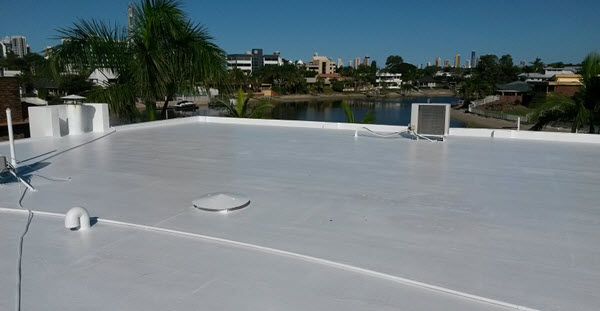
Completed Thermal Top Coat


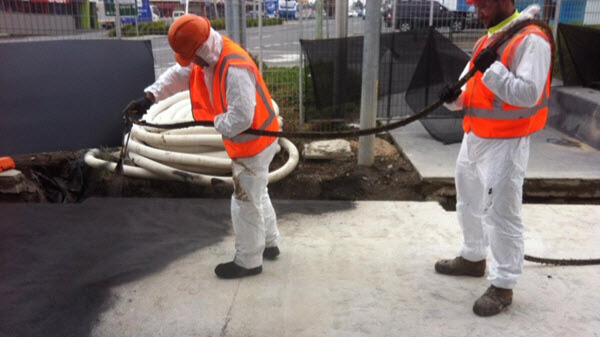
Spray Application of Thermal Top Coat


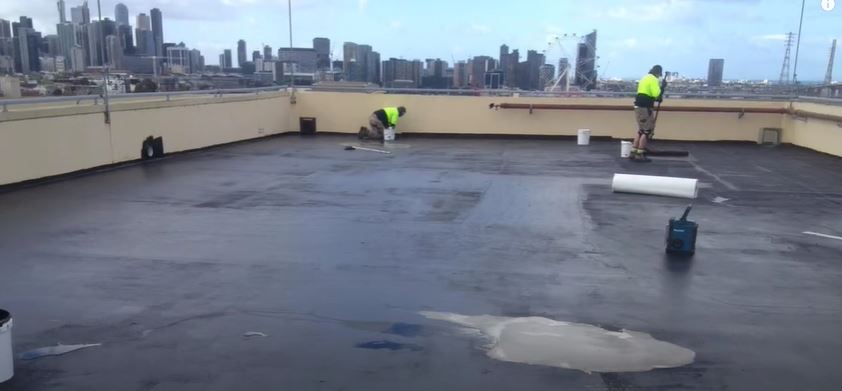
Failed Existing Roof Membrane – Leaking concrete roof with ponding water


Flat concrete roof sections with roofs damaged caused by ponding water.

Spray On Liquid Waterproofing for Metal Roof


View Case Study Video Below

Waterproofing Shipping Containers

  • A single spray-applied coat of a Liquid Applied Membrane will repair & restore an entire metal roof surface.
  • A single spray-applied coat of a Liquid Applied Membrane will repair & restore an entire metal roof surface.
  • Save costs due to eliminating the expense & down time of an entire roof replacement.
  • Metal roof requires a waterproof coating that will encapsulate rust, joins, seams & around roof penetrations & services.
  • Liquid Membranes are sprayed applied to any shape or profile.

Read More Here.

Video Case Study: Waterproofing Rooftop Terrace

Waterproofing Membrane for Concrete Roof

Climatic conditions age, dry & shrink older existing waterproofing membranes – this may cause surface cracks to form on a concrete roof. Moisture begins to seep into these cracks increasing the possibility of structural damage. Read here about waterproofing solutions to resolve concrete roof leaks.

Video Case Study: Leaking & Deteriorated Concrete Roof

Roof Waterproof Membrane for Timber Deck

This waterproofing system for a rooftop terrace & balcony required an integrated structural waterproofing installation involving building works for timber decking.

The existing roof membrane had failed miserably and a large timber deck needed to be bolted down over the top of the newly installed waterproof material.

Read about this project here

Heat Reflective Thermal Roof Waterproofing Membrane

Cool roofs reflect more sunlight and absorb less heat than traditional dark-colored roofs.
White Thermo Top Coat is applied over a base coat of Liquid Rubber-providing a heat reflective waterproof roof membrane.
Video Case Study Here

Video Case Study: Spray On Membrane for Metal Roof

Spray Applied Liquid Waterproofing for Roofs

However our waterproof method of choice for roofing systems are Liquid Applied Membranes (LAM).These membranes are seamless, elastomeric coatings which also have the advantage of being extremely robust and with full adherence to just about any roof surface – also with a 15 year warranty.Read About – Liquid Applied Waterproof Membranes

Roof Waterproofing Membrane

Melbourne Roof Waterproofing Services – Contractors

We are both Registered Building Practitioners & Specialist WaterproofersWe have successfully repaired & installed roof waterproofing membranes throughout Melbourne CBD & metro area.Providing long term solutions for all roof waterproofing : roof repairs, concrete, metal, timber, flat roof & commercial & industrial roof.Read about F.E.W WATERPROOFING here

Using Liquid Waterproofing Membranes

Read Client Testimonials Here.

Download PDF Roof Waterproofing Projects Here.

Download PDF Roof Waterproofing Projects Here.

Industrials & Infrastructure

Industrial & Infrastructure – Metal Protection: Roofs, Tunnels, Tanks, & Irrigation Channels

Roof Repairs & Rehabilitation

Findlay-Evans Waterproofing Provide Robust Long-Life

Liquid Applied Waterproofing Membranes

Liquid Membranes are the ideal waterproofing product to seal and make watertight “busy” industrial & infrastructure surfaces – concrete, metal – new and existing.Being a spray-on waterproofing method, Liquid Rubber Membranes can be applied around and up commercial and industrial roof surfaces.Liquid waterproof coatings seal around all penetrations, up-stands, ducts, cable trays, air conditioning & cooling towers, TV & mobile phone responders, satellite dishes, solar panels, etc.

Findlay-Evans Waterproofing Method

Using Liquid Applied Membranes on Metal Roofs


Liquid Spray Apply to Metal Roof


Liquid membrane contours to shape


Liquid Roof Coatings

Case Study Video – Leaking Metal Roof with Rooftop Services & Utilities

Rust Protection & Anti-Corrosion

Findlay-Evans Waterproofing use Liquid Rubber spray or paint-on application to protect ferrous metal structures subjected to water and/or chemically aggressive environments.

  • Liquid Rubber membranes – specially designed coatings providing exceptional corrosion protection.
  • Instant-set, seamless & flexible membranes with chemical and abrasion resistance.
  • Suitable for safe applications even in confined spaces such as storage and processing tanks.
  • Also with resistance to cracking, aging and de-lamination.
  • Great alternative to conventional epoxy, urethane or solvent based protective coatings.
  • No Primer is required. Unlike many other protective coatings, Liquid Rubber can be applied directly over lightly rusted metal.


Liquid Rubber


Rust Protection & Anti-Corrosion

Case Study Video – Waterproofing Shipping Containers

Shipping containers provide an affordable structure that can be modified in various ways creating a multitude of uses.

A city cafe, situated in inner urban Melbourne, was created out of shipping containers – quite an unique waterproofing project.Findlay-Evans Waterproofing provided a Liquid Rubber waterproof membrane for these three shipping containers that were being transformed into a trendy urban cafe.

Video – Findlay-Evans Services

Building Practitioners And Certified Waterproofers
Paul Evans, Manager/Director Findlay-Evans Discusses Waterproofing Methods & Systems

Case Study Video – Waterproofing Repairs to Flat Concrete Roof Melbourne CBD – Power Station

Why Use Spray-On Liquid Waterproofing

Findlay-Evans preferred choice for waterproofing products are Liquid Rubber Waterproofing Systems.

Video – Liquid Waterproofing FAQs

  • Liquid Applied Membranes (LAMs) are the new generation of environmentally friendly waterproofing systems.
  • These are hard wearing, seamless, monolithic and flexible waterproofing systems that can also be structurally reinforced.
  • Liquid Membranes are capable of resisting UV rays, Salts, Pollution & withstanding “potable” (standing) water.
  • Liquid Membranes are also anti-corrosive, rust proofing & encapsulates asbestos.
  • All work is supported by company, manufacturers’ warranty, OHS compliant and applied by Certified Applicators.
  • For technical specifications and further information regarding Liquid Rubber Waterproofing systems refer to: www.liquidrubbermelb.com.au.

Eco-Friendly Membranes

  • Satisfies all OH&S issues and compliance.
  • Avoids the use of adhesives, heat welding used for torch-on & older methods of waterproofing.
  • Suitable for safe applications even in confined spaces such as storage and processing tanks.
  • Unaffected by a range of acids, alkalis and water borne salts.
  • Great alternative to conventional epoxy, urethane or solvent based protective coatings.
  • Extremely fast spray application – up to 3 x times faster than conventional methods like torch-on or sheet membranes.


Spray Applied Elastomeric Liquid Membrane

Waterproofing Metal

Liquid Applied Membranes

Seal, protect & provide anti-rust protection for metal surfaces.

SEALING & RUST PREVENTION

Metal Protection Membranes

  • Storage and Processing Tanks
  • Water Treatment Plants
  • Chemical Processing Facilities
  • Power Plants
  • Bunding Tanks


Liquid Rubber as Anti-Corrosion


Waterproofing Metal Roof

Solving Roof Leaks with Liquid Waterproofing

Harnessing the Power of Liquid Rubber: A Case Study on Cost-Effective and Robust Roof Repair Solutions

Case Study – Roof Repairs

How to repair a roof with an existing leaking waterproofing membrane.

The Findlay-Evans Team were contracted to repair a leaking commercial rooftop; the existing membrane had deteriorated – most likely due to an inability to move with expansion and contraction of the roof surface.

We over coated the existing damaged membrane with a spray apply Liquid Rubber waterproofing barrier.

This provided a robust waterproofing membrane with fast spray installation without the costly alternative and disruption of replacing the old roof.

Case Study Video: Rooftop Membrane Repairs

Using Liquid Rubber Waterproofing Membranes

Our preferred choice of waterproofing product for roof projects is the Liquid Rubber system.

Liquid Rubber membranes have the unique properties of extreme flexibility combined with robust adhesion to the surface – both ideal qualities for a rooftop waterproofing membrane.

Flexibility is a vital property for quality roof waterproofing membranes

A Liquid Rubber membrane will expand and contract with the thermal cycle of a building. This means Liquid Rubber has the capability of moving with the structure or substrate it is adhered to.

Liquid Rubber has an elasticity with elongation to 800% and memory 95%.

There is no other product on the market that we know of that can move with buildings and structures in such way as Liquid Rubber.

Liquid Rubber also has the added ability of enhanced longevity and guaranteed will not crack with age.

Extreme Flexibility Of Liquid Rubber

Why Use Liquid Applied Waterproofing Membranes

Liquid Membranes provide a robust fully bonded waterproof membrane – NO SEAMS OR JOINS.

Liquid roof membranes also conform to the contour and shape of the roof substrate – perfect for profiles, complex and irregular contours.

Seamless Liquid Waterproofing

Spray Applied Liquid Waterproofing Applications

Sheet membranes have seams or joins which are a point of weakness for water leaks – there is always the potential for joins to delaminate with age.

Water can then track underneath these cracked joins and quite often end up quite a distance from the original point of entry. This makes it extremely difficult to detect the source of water leaks and provide a solution.

Liquid applied membranes are a monolithic, fully-bonded and strongly adhered membrane without joins or seams – preventing cracking due to aging and UV sunlight.

Waterproofing Membranes – SEAMLESS & FLEXIBLE

Spray application is a very fast process – we can spray up to 800m2 coverage per day of a rapid curing waterproof membrane, depending on climatic conditions.

Liquid Rubber membranes can provide water protection to a wide range of surfaces – concrete, timer, metal, flat, sloped or curved.This is an effective and cost efficient method of remedial work without the costly need of removing the existing roof.

How to Fix a Leaking Balcony

Understanding and Addressing the Consequences of Leaking Balconies

If it has a balcony, it will leak

This is unfortunate statement quoted from an article: “Melbourne’s high-rise nightmares taking a tall toll on residents and investors” The Age, Melbourne 25th September 2016
Though this article was referring to Melbourne’s booming construction in the multi level apartment sector, many capital cities across Australia are experiencing similar issues. And leaking balconies are not restricted to multi level apartments, but unfortunately to many recent constructions.

Effects of Leaking Balconies

There are several key points within this article I would like to emphasize

  • Residential multi-story, multi-dwelling, apartment buildings are experiencing an alarming frequency of building defects, most commonly caused through waterproofing failure.
  • Balconies were identified as a major cause of waterproofing problems.
  • This has led to the common assumption that for many multi-level balconies “proper waterproofing membranes are not installed”.
  • The market has inconsistencies about Insurance cover, both from building trade cover and the residential owners cover. Resulting in the building owner necessitating to self-fund the corrections to the building.
  • The Victorian Government is making new laws to protect consumers whilst also recognising the ‘overwhelming majority of builders’ do the right thing.


“Efflorescence” occurs only in the presence of water.


Complete Strip Out – Leaking Balcony

This article diving into the question “Why is my balcony leaking” has been supplied by Paul Evans, Findlay & Evans Waterproofing – President of Australian Institute of Waterproofing (AIW).

Construction methods are always changing and adapting.

As a Registered Building Practitioner, I have noticed recently, either for reasons of design and/or cost considerations, changes in balcony construction methods which have a direct impact on the success or otherwise of the waterproofing membrane.

Waterproofing Leaking Balconies – Multi Level Apartment

  • Many balconies are currently being constructed with minimal falls to the substrate; particularly evidenced in multi-level apartments.
  • This design has a significant effect on the choice of waterproofing product, installation method and tile adhesives used.

  • The balcony membrane must be capable of “standing water”; as a balcony with minimal fall will have water ingress through the grout resulting in moisture “ponding” between the membrane and tiles.

Best Waterproofing Product to Fix Leaking Balconies?

  • Waterproofing membrane MUST be able to withstand “PONDING” water.
  • If the waterproofing membrane selected cannot withstand ponding water – and many waterproofing products on the market cannot – over time and together with the normal cyclic thermal contraction and expansion of a building, this will cause the membrane material to break down and/or joint failure and cause water leaks.

Why do Balconies Leak ?

  • Balconies and walkways are exposed to the destructive forces of the elements: rain, wind, sunlight, and freezing conditions.
  • All too often, penetration of water is through the top balcony surface and exposed edges of both reinforced concrete and timber framed balconies.
  • This leads to deterioration of the balcony structure and significant defects occur, such as concrete spalling.Accumulation of calcium crystals and salts is known as “Efflorescence”.Efflorescence only occurs on balcony surfaces due to the presence of water.

How to Fix a Leaking Balcony?

In my experience, there are recurring issues causing waterproofing failure:

  • Inadequately waterproof detailing from balcony to wall interfaces.
  • Using cheap (inferior) waterproofing products to save money.
  • Railing post and penetrations causing water ingress due to poor preparation and detailing.
  • Poorly detailed balcony surface transitions, interfaces and penetrations can lead to water ingress into occupied spaces below which in turn may lead to serious structural damage. Failure to pick up building defects through the building surveyors’ inspection process.


Damage due to leaking balcony above.


Damage due to water leaks.

  • Unfortunately, many of these issues are not always taken into consideration when contractors/specifiers/designers are deciding on waterproofing products and methodology for constructing balconies.
  • This may result in the owners, investors and owners’ corporation having to face the challenges of solving future leaking balconies.

Best Balcony Waterproofing Product

  • A waterproof system should have comparable expansion capabilities as the balcony structure itself.
  • This means, the waterproofing material used to seal a balcony should be flexible.
  • Balcony water proof product needs to contract and expand with the normal thermal cycle.
  • Adherence: the membrane should strongly adhere and seal to all horizontal & vertical surfaces i.e balcony surface, balustrades, penetrations & adjoining walls/structures.
  • Create a permanent and robust water tight bond & seal around all balcony edges, and interfaces.

Can balconies be repaired without removing tiles?

  • Re-grouting and surface sealing is not the way to repair a leaking balcony if it has been established there is a defective membrane.
  • This band-aid method may stop or slow down water leaks for a while.
  • That is until the balcony moves and cracks the grout again and inevitably the balcony will start to leak all over again.
  • Unfortunately in most cases of leaking balconies to provide a long term solution is a complete strip off, re-install a new membrane, screed & tile or whatever other finished surface i.e instant turf.


After numerous attempts at stopping water leaks, this balcony had to be stripped and membrane re-installed.

Waterproofing Method for Successful Balcony Restoration & Repairs

  • Using Correct Waterproof Product – selecting long life membranes that are also cost-effective and suitable for the balcony design and conditions.
  • Membrane must be capable of bridging cracks and joints within the sbalcony substrate.
  • Correct Waterproof System – make water tight all balcony surfaces, interfaces, and penetrations.
  • Membrane Flexibility – the waterproof membrane must be able to move with the normal contraction & expansion of the balcony envelope.
  • Waterproof Membrane must be able to withstand “ponding” water.
  • Waterproof System installed with minimal disruption to building occupants.


Rooftop Balcony & Instant Turf


Balcony Waterproofing Company – Melbourne

View Video Below

Findlay-Evans Waterproofing Company

REGISTERED BUILDING PRACTITIONERS & CERTIFIED WATERPROOFERS

Read about Findlay & Evans Waterproofing:

Read Our Article – First Published March 7, 2017

https://www.lookupstrata.com.au/water-leak-from-balcony/

A waterproofing company that thinks CONSTRUCTION

Registered Builders for structural repairs: Building Services Australia

Licensed Waterproofers |CM3 Accreditation


Australian Standards Melbourne Waterproofing Company is CM3 Accredited

In Melbourne Construction Industry

What does CM3 Certification mean?

By achieving CM3 prequalification, gives Findlay-Evans Waterproofing clients assurance that safety & health management has been assessed by third-party professionals.

The CM3 OHS/WHS prequalification system demonstrates to current and potential clients that the right insurances are checked as well as comprehensive assessment of our safety systems.

Video – Melbourne Waterproofing Company

Paul Evans, Manager/Director Findlay-Evans Waterproofing, discusses waterproofing standards and training.

For more than 30 years, Findlay-Evans Waterproofing has been involved in the construction industry and remediation projects.

Paul Evans, Manager/Director of Findlay-Evans Waterproofing, is also President of Australian Institute of Waterproofing (AIW), is a passionate advocate for training and regulation for the waterproofing industry in Victoria.Paul Evans, Manager/Director of Findlay-Evans Waterproofing

Our Waterproofing Services

Leaking Balcony – Rectification & Waterproofing Repairs

Basement, Below Ground & Retaining Walls

Flat Concrete Roof– Commercial Waterproofing

Metal Roof – Commercial Waterproofing

Under Slab Vapour Barrier

About CM3

  • FINDLAY-EVANS WATERPROOFING are proudly CM3 Certified.
  • CM3 is an online health and safety prequalification assessment and ongoing insurance verification system.
  • CM3 prequalification gives our clients the assurance our health and safety management capability has been assessed by independent professionals.
  • CM3 shows Findlay-Evans is committed to annual review of our systems and implementation.
  • We are committed to strong health and safety capabilities and becoming a CM3 prequalified waterproofing contractor is part of our ongoing commitment.
  • Being CM3 Certified allows Findlay-Evans to work with some of the most prestigious construction companies.
  • For further information about contractor prequalification, go to: www.cm3.com.au

Findlay-Evans Certification

Registered Building Practitioner      Registered Building Practitioner (RBP) DBU – 7983

waterproofing specialist melbourne     Australian Institute of WaterproofingCurrent AIW President.

    Master Builder of Victoria – Specialist Contractor 94507

     Prequalified Contractor 94507

Waterproofing-Applicators-Melbourne

Articles & Publications

By Paul Evans

Manager/Director Findlay-Evans Waterproofing

President Australian Institute of Waterproofing (AIW)

Committed To Raising Waterproofing Standards and Training in Australia

The Australian Institute of Waterproofing represents the interests of the whole building industry…

BUILDIT Journal

solving-roof-balcony-leaks-Melbourne

Solving Roof & Balcony Leaks is Not Just About Waterproofing

Water leaks are always a tough job for facility managers.

Facilities Perspective Journal

commercial-waterproofers-Melbourne-balcony

If it Has a Balcony, It Will Leak

This article diving into the question “Why is my balcony leaking” has been supplied by Paul Evans, President – Australian Institute of Waterproofing (AIW).

LookUpStrata Online Journal

Leaking-Balcony-Melbourne

Australia Must Improve Waterproofing Standards and Practices

Often, Evans said, waterproofing is not even nominated in specifications with which builders are presented during tender processes.

Sourcable

Being CM3, Allows Findlay-Evans Waterproofing To Work With Some Of Melbourne’s Most Prestigious Companies In Construction.

waterproofing-customer-reviews-melbourne

Video

Press Release: Findlay-Evans Waterproofing

Celebrates CM3 Certification In Melbourne

PRESS RELEASE Melbourne, VIC– It’s hard to determine which waterproofing companies out there know what they’re doing. Many companies use the industry to make money, without concern for the well-being of clientele. The CM3 certification measures quality and safety in contractors. In order to provide expert service, Findlay-Evans Waterproofing has taken the steps to secure CM3 certification for their company.Findlay-Evans Waterproofing is run by experienced Managing/Director Paul Evans, who has built up over thirty years of industry experience. Paul has seen practices within Victorian construction the industry that need improvement, and has taken it upon himself to provide high-quality, safe services at a fair price. As a Melbourne waterproofing contractor, this means safety management is a major priority.As a result of hard work and the staff’s dedication to the company, they have become CM3 certified licensed Melbourne commercial waterproofers. This means Findlay-Evans health and safety standards are higher than that of other non-certified companies. This exciting development in the company’s journey marks a major milestone in providing the safest services possible to clientele.The primary distinction between CM3 certified contractors like Findlay-Evans Waterproofing, and other contractors, is quality. This quality spans across the board, affecting each aspect of the company and its relationship with clients and other businesses. CM3 certified contractors have a more effective safety management process. This helps clients to reduce costs and time spent on internally pre-qualifying contractors.Findlay-Evans Waterproofing uses their CM3 certified status to partner with the most prestigious construction businesses in the industry. In addition to higher quality partnerships, the CM3 holds the company itself to a higher safety standard as a result of annual systems reviews. The Melbourne contractor verifies their compliance on a regular basis in order to maintain their superior status.As a result of CM3 certification, Findlay-Evans Waterproofing has solidified their place as one of the safest, highest quality contractors in the Melbourne area. Managing Director Paul Evans has lead this emerging company in raising their standards and exceeding client expectations.A staple of the area, this contractor continues to grow and adapt to changing industry standards. The CM3 certification is one of many more exciting changes to come for this innovative contractor. Improved transparency, reduced client cost, and speedy prequalification are all benefits of working with this CM3 certified contractor.Findlay-Evans Waterproofing

Contact Name: Paul Evans21/9 Dawson St Coburg North VIC 3058

Email: info@waterproofingfew.com.au

Findlay & Evans Waterproofing Melbourne

Liquid Rubber- Roof Waterproofing Membrane

Using Liquid Spray-On Membranes to Permanently Fix Roof Leaks

Case Study: Severely Leaking Concrete Roof Slab

Brought back to life with a single spray application of Liquid Applied Waterproofing System.

Infographic – Findlay-Evans Waterproofing Solution for Roof Leaks


Existing roof surface


Lots of preparation required.


Our team starts the preparation work


Waterproofing concrete roof


Before and after


Liquid membrane applied

Video – How to a Fix Leaking Concrete Roof

  • Best waterproofing method are Liquid Applied Systems.
  • Liquid Applied Waterproofing Membranes are the new generation state-of-the-art product providing permanent waterproof coatings for leaking roofs.

View Case Study Video Below

Video Transcript – Concrete Roof Case Study

Hello this is Paul Evans, Findlay-Evans Waterproofing.

This is a waterproofing case study how to fix leaking concrete roof.

This concrete roof is a commercial building Allied Mills in Melbourne CBD.

The membrane system applied to the flat concrete roof slab was causing water ingress to the areas belwo the roof.

Due to the fact this was a commercial premises producing flour, the roof water leaks had to be solved permanently.

The concrete roof basically was in structurally good order.

However, the waterproof membrane was badly deteriorated and leaking.

The Findlay-Evans Team removed the defective waterproof membrane system by a lot of manual labor by scraping it off in this situation.

Access was limited on this job, and quite high up, as the images can show.

Our Team used mechanical scrapers to actually remove all the old polyurethane membrane which had deteriorated rapidly.

Once all the polyurethane membrane was removed off the concrete roof, we then went about cleaning the concrete roof again.

This is to ensure that we had a good bonding surface for the new liquid rubber membrane.

Some areas of the leaking roof needed some repaired screed, – so we screed them up with a special designed flexible screed, and that then was overcoated with a liquid rubber membrane.

To protect this concrete roof, it’s important to make sure that a liquid rubber waterproofing membrane was used – as it is a highly flexible membrane.

This extreme flexibility allows the membrane to move withe the building due to normal expansion and contraction.

This building actually being so tall, moves quite frequently, unbeknownst to the naked eye, but it does move around a fair bit. So, just wind applying on the building causes vibration and movement.

This movement is then taken up by using a liquid roof membrane.

Once one spray-applied layer of Liquid Rubber was installed , we put an interlayer of fiberglass mesh into it again, to toughen it up.

Then overcoated the whole roof system with a thermal top coat.

Thermal Top Coat allows temperature reduction to areas beneath the concrete roof quite considerably.

This helps with internal ventilation basically in keeping the place cool inside during summer months.

The system was fully overcoated with our thermal top coat to produce a nice gray finish, which is pleasing on the eye, as well as thermally reflective.

This extensive remedial waterproofing project was completed on time and on budget.

So, if you got any questions:

Phone: 03 8812 2198

Email: info@waterproofingfew.com.au

W: www.waterproofingfew.com.au

Case Study Audio File

Roof Coating for Leaking Rooftop Deck

Listen to Audio File Below

Roof Waterproof Coating – Liquid Membranes

  • Liquid Rubber can be applied vertically and horizontally – around all roof penetrations and rooftop deck utilities.
  • Spray applied waterproofing can be applied directly on the existing roof surface.
  • This will restore a leaking and deteriorated roof back to life without removing the old membrane – saving costs and time.

Case Study Videos

Findlay-Evans Waterproofing Projects: solving roof leaks in Melbourne.

Melbourne Roof Waterproofers

Roof Waterproofing Contractors

Findlay-Evans Waterproofers

Waterproofing-Applicators-Melbourne

Find Out About Findlay-Evans

Registered Building Practitioners (RBP) Certified Waterproofers &Master Builder Victoria (MBAV) – Specialist Contractors

Commercial Roof Waterproofing – Melbourne

Waterproofing Repairs to Flat Concrete Roof

  • Our Waterproofing Team have over 40 years’ experience in the construction and waterproofing industry in Melbourne – specializing in commercial & industrial waterproofing projects.
  • Manager/Director of Findlay-Evans, Paul Evans, is passionate about training and standards within the Australian waterproofing industry and has volunteered much of his own time and service to the industry.
  • Paul Evans is the current President of the non-profit industry association, Australia Institute of Waterproofing (AIW), previously serving as Vice-President and participated as an active AIW committee member for over 6 years.
  • As President of the AIW, Paul was instrumental in designing together with the Master Builders Victoria (MBAV) the training program “Waterproofing in Construction Course” which started in 2017.
  • The MBAV “Waterproofing in Construction Course” Training Course is aimed at industry professionals who have a responsibility to ensure a construction project is water tight and intended to educate with respect to planning, design, selection of products and waterproofing application.

Melbourne Waterproofers - Australian Institute of Waterproofing

Our Waterproofing Team

Liquid Applied Systems for Roofs

Why Use Liquid Membranes?

  • Liquid Applied Membranes are recognised as the industry leader for roof waterproofing systems within the commercial & industrial construction sectors.
  • Robust & extremely flexible membranes that last up to 20 years & beyond.
  • Spray Applied Liquid Rubber has been used in North America & Europe for over 30 years with many high profile projects successfully completed.
  • F.E.W Waterproofing are Registered Building Practitioners – we provide expert experience & knowledge as specialist waterproofers based in Melbourne.
  • See here for more information about Liquid Rubber in Melbourne and throughout Australia: Click Here

Waterproofing Roofs – Flat Concrete & Metal

Video Case Study – No need to replace the roof or existing old membrane!

Using Liquid Applied Roof Coatings – suitable for all types of roof surfaces: Liquid Rubber roof membrane can be sprayed over the top of existing epdm, sheet and torch-on membranes.

  • Flat concrete roof
  • Metal, Corrugated Iron & Clip Lock Profile
  • Asbestos
  • Timber

Flexible Membranes – robust, seamless, no joins – ideal waterproofing system for rooftops.

Video Case Study – Commercial Waterproofing

No need to replace the roof or existing old membrane

Choosing Best Waterproofing Product for Roof

Liquid Rubber Waterproofing System

  • Viable long-term alternative to removing and replacing the existing roofing material.
  • Waterproof coating spray spray applied without effecting or disrupting the workplace below.
  • Fast Spray Application – 100% waterproof barrier and outstanding adhesion.
  • Application in a single coat to combat flaking, rusting and peeling metal, asbestos.
  • One seamless membrane – reinforcement over seams and joins so water cannot seep through.
  • Preserves the life, look & longevity of buildings & structures.

View Waterproofing

Video Case Study

Reviews – Expert Roof Waterproofers

Published articles by Paul Evans, Findlay-Evans Waterproofing:

Facility Perspectives – Solving Roof Leaks

Facility Management Australia

Australia Must Improve Waterproofing Standards – Sourceable

Client Testimonials

See what our customers have to say about Findlay-Evans Waterproofing.

  • Our testimonials & images are from real clients & our own waterproofing projects.
  • Where possible testimonials will include: project photos, job ID Number from our online field software, customer initials or GPS location to authenticate our work.
  • We hope this provides our potential customers with trust & confidence.

Read Testimonials HERE

Google My Business Client TestimonialsHERE


DON’T GAMBLE ON YOUR HARD EARNED PROFITS!
HAVE YOUR WATERPROOFING INSTALLED CORRECTLY AND PROFESSIONALLY

Fix Leaking Roofs

Fixing Leaking Roofs with Liquid Rubber

Melbourne Contractors to Fix Commercial Roof Leaks

Findlay-Evans Waterproofing use Liquid Spray On Membranes to fix and permanently seal roof leaks.Liquid waterproofing is today’s choice for commercial and industrial coatings for concrete roof slabs, roof decks, around rooftop utilities and seal low-slope corrugated metal tray deck roofs.

View Video Below

Types of Roof Waterproofing Systems

Liquid Membranes are a great alternative to traditional waterproofing products like bitumen roofing, EPDM, sheet and roll on applications.


Sheet membrane lacks full adhesion to concrete roof surface.


Sheet membrane – seems and joins de-laminate.

Older generation waterproof membranes have many disadvantages:

  • Joins and/or seams which are areas of weakness & potential for water ingress.
  • Sheet Roll On membranes use adhesives which are solvents and contain VOCs.
  • Torch On – requires heat & flame & becomes a safety & OH&S issue.
  • Lack flexibility required for rooftop waterproofing – many conventional older style waterproofing products dry out & develop cracks with aging.
  • Inability to withstand “ponding” (standing) water – critical for balcony & flat or low-slope rooftops.

View Video Below

Liquid Applied Waterproofing

Findlay-Evans use an alternative to existing adhesive roll-out sheet and heat applied systems.Liquid Applied Membranes have become the ultimate roof waterproofing membrane of use in today’s commercial and industrial market.View our many video Case Studies showing how the Findlay-Evans Team solve leaking roofs – concrete or metal – using Liquid Applied Systems.

View Video Below

Waterproofing Method & Roof Coatings

  • Fast application with cold spray applied method.
  • Requires no primers, mixers, flames or heat – contributing to safer and faster applications.
  • No need to remove roof or existing membrane.
  • Seamless, Flexible & Monolithic Membrane
  • Extremely robust with full adherence to just about any surface.
  • Long life and durable with standard 15-year warranty or extended 20 years.

View Video Below

Solar Heat Reflective Roof Waterproof Coating

Using the combination of a Thermal Top Coat + Liquid Rubber Membrane  provides an excellent & robust waterproofing repair system for all new and existing rooftops.

Roof application of thermo top coat.

How to fix leaks in a corrugated metal roof

Using Liquid Rubber Membranes

How do you stop a metal roof from leaking?
See Case Study below using Liquid Membranes to fix water leaks by spray apply over existing industrial metal roof.

View Video Below

Melbourne Waterproofing Contractors

A waterproofing company that thinks CONSTRUCTION

Findlay-Evans WATERPROOFING are Registered Building Practitioners and specialist applicator for Liquid Applied Membranes.

Find out why Findlay-Evans, Melbourne based waterproofing company, use Liquid Applied Membranes to fix leaking roofs.

Paul Evans, Manager/Director and President of Australian Institute of Waterproofing, discusses waterproofing methods in video below.

View Video Below

Heat Reflective Roof Coatings

roof-waterproofing-membranes

Waterproofing Concrete Roof Slab

Effective Strategy for Waterproofing Concrete Roof Slab

Best Waterproof Coating to Permanently Seal Leaking Concrete Roof Slabs

  • Water leaks are the biggest enemy for commercial buildings with flat concrete roof slabs.
  • After the foundation, the roof is probably the next most important structural component.
  • If drainage is inadequate (due to design or maintenance issues), water will “pond” on the roof surface.
  • And if the existing waterproofing product is not suitable for standing water, the membrane will eventually fail.
  • To maintain the integrity of a building, leaking roofs require permanent long term solutions to prevent structural damage and/or water ingress beneath.
  • There comes a stage when “patching & short term” options waste time, money and ultimately safety.

Failed existing roof membrane.

Findlay-Evans provide quality roof waterproofing repairs & systems. Guarantee Long Term Permanent Solutions.

Waterproofing repairs to flat concrete roof.

See Findlay-Evans Video Case Study Below

Findlay-Evans Roof Waterproofing

Using Liquid Applied Membranes

Video – Roof Waterproofing Case Study

How seamless liquid spray on membranes repair commercial roof leaks.

  • In situations of leaking roofs and failed existing membranes, like the roofs above, seamless liquid roofing membranes are cost effective and extremely fast to apply.
  • Roof waterproofing systems are sprayed directly onto the roof surface; creating a single monolithic waterproof coating.

Different types of roof coatings

The Findlay-Evans Team regularly inspect extensive roof damage due to water leaks. There are several waterproofing methods available to solve roof leaks.

  • Liquid Applied Membranes
  • Sheet Membrane bonded with adhesives
  • Torch On Sheet Membranes – bonded with heat and/or flames

Video – Different Waterproofing Membranes

Paul Evans, Manager/Director Findlay-Evans Waterproofing and President of Australian Institute of Waterproofing, discusses the different types of waterproof membranes.

Melbourne Waterproofing Contractor

Findlay – Evans roof waterproofing product of choice are Liquid Applied Membranes (LAMs).

  • Liquid membranes are seamless, elastomeric coatings which also have the advantage of being extremely robust and with full adherence to just about any surface – also comes with a 15 year warranty.
  • Liquid Rubber Waterproofing Membranes are a great alternative to bitumen roofing, sheet and rolls which have many disadvantages i.e joins/seam, heat & flames and are not fully bonded to the substrate.

Video – Why Use Liquid Spray On Membranes?

Protecting Commercial Concrete Roofs

Video – sunshine Hospital

Find out how Liquid Rubber is the ideal roof waterproofing system for a commercial building in Melbourne’s CBD.

Waterproofing around roof penetrations

  • Liquid applied membranes are sprayed directly on the roof surface – this makes a fully bonded coating – as opposed to Sheet and Torch On systems.
  • Liquid waterproofing makes it easy to completely seal around and under “busy” roofs – that is rooftop decks with facilities in situ.
  • Concrete or metal – Liquid Rubber Membranes waterproof around roof utilities, conforms to all shapes and seal roof penetrations.

Best Roof Coatings

  • The ideal roof coating provides a cost effective, efficient and permanent water barrier to water and prevents ingress.
  • This avoids the constant ongoing maintenance & roof repairs.
  • Fixing roof leaks with spray applied membranes will restore a roof with one application avoids constant maintenance repairs roof removal.
  • Liquid Spray Apply Membranes are extremely durable and a long-term solution for leaking roofs.
  • The Findlay-Evans Team offer roof coatings with heat reflective chemicals – providing significant reduction of interior temperatures.

View Case Study Video Below

Solar Heat Reflective Thermal Membrane

View Case Study Video Below

Findlay-Evans Provides Quality Waterproofing

Video – How to Waterproofing

1. Great preparation prior to waterproofing application

  • The liquid membranes are applied like paint and, when dried, they generate an impermeable elastic film without seams, which allows sealing all those points where the waters could easily stagnate, guaranteeing the longest durability and resistance of the system in general.
  • The resulting coating is permeable to water vapor and resistant to UV rays.
  • Although their elasticity allows them to correctly resist the expansion of their surface –for example, as a result of high sun exposure–, it’s recommended that in these areas the membranes incorporate reinforcing fabrics or meshes, giving them greater resistance to the tension and the tearing.
  • In addition, liquid membranes can provide other benefits, such as improving the appearance of old roofs, mitigating roof noise and improving thermal insulation.


Preparation of existing membrane.


Careful preparation $ masking of existing rooftop services.

Cement Block Retaining Walls

Waterproofing Membranes for Cement Block Retaining Walls

Leaking basements issues are a very common problem (sadly) and there is only one effective way to permanently resolve water leaks for existing masonry (concrete) retaining walls.The best and permanent solution to stop water leaks to below ground walls – either cement block retaining walls, masonry, besser block etc – is to do the job right!

That means using the correct below grade system possible – and not just based on price alone. The consequences of basement leaks can be expensive and time consuming. If remedial waterproofing is required further down the track, then “positive” waterproofing – on the external surface – is the best option.

View Video Case Study – Below Ground Tanking Melbourne

Findlay-Evans Waterproofing – Melbourne Specialists

Using Liquid Applied Membranes to Waterproof Retaining Walls

Best Basement Waterproofing System

Water Leaks and Below Ground Tanking

  • Using low-cost waterproofing product and is not guaranteed by the manufacturer.
  • Not worrying about the standard of work, prep or number of waterproofing coats applied.
  • Skimping on drainage behind the wall.

5 Steps to Waterproof Existing Basement & Retaining Wall

  1. 1Excavation
  2. 2Preparation
  3. 3Waterproofing Application
  4. 4Membrane Protection
  5. 5Drainage

1. Excavation

  • The basement and/or retaining wall needs to be excavated from the outside and ALL the way down to the base of wall and just beyond (onto the footing or edge of concrete slab).
  • This is to expose the affected basement wall/s.
  • The best and permanent waterproof solution to stop water leaks to below ground walls – either cement block retaining walls, masonry, besser block etc – is from the outside.

2. Exterior Surface Preparation

  • Best practice waterproofing method is meticulous preparation – a detailed clean & dry wall.
  • This stage is often not left out and not performed to standard.
  • Any imperfections repaired with either a sand and cement slurry (bagged) with a bit of Bondcrete mixed in and applied to all the brickwork joints and any holes, etc to create a surface for the new membrane application.
  • Allow the bondcrete to dry out for a couple of days.
  • You would then thoroughly clean (wire brush) the wall. After that you would bag the wall by using a hessian “bag” and apply sand and cement mortar slurry to fill all the little gap and holes in the wall.
  • Let dry.

   
Rendered wall prior to waterproofing application.

How to Prepare Retaining Walls for Waterproofing

  • The perfect waterproof preparation to ensure membrane adhesion for retaining walls is a rendered / bagged surface.
  • Our Team, Findlay & Evans, apply rendering to all cement block walls prior to application.
  • We also prepare the footing and foundation joins with flexible Geotextile Bandage to bridge all surfaces.
  • Also as part of our waterproofing method for retaining walls, we fill all wall voids, form-tie holds and joints.

Cement block retaining wall preparation prior to waterproofing application.


Below Ground Waterproofing – Design & Planning

Durability of design and materials is mandatory with below grade waterproofing systems.


Below ground waterproofing is one of those areas usually unseen and I am not sure if it is this “out of sight, out of mind” mentality, however it is an area of construction often neglected.

3. Type of Waterproofing Product

  • We have tried many different types of basement waterproof materials; Findlay-Evans recommends the best basement waterproofing product is: Liquid Rubber membranes.
  • Liquid Applied Membranes are spray or roll on application with an acrylic eco-friend Liquid Rubber.
  • Liquid is applied in three coats (each in a different direction- preferred) – allowed to cure for another couple of days.
  • 3 thorough coats of Liquid Rubber allowing each coat to cure in between approx. 24 hours. (If it’s a nice sunny day, you could do one coat in the morning and second in the afternoon.)
  • The final membrane requires approx. 2 days to cure.

     
Rendered wall prior to waterproofing application.

4. Membrane Protection

  • The waterproofing membrane on retaining walls always need protection.
  • Arma-Blue semi adhering protection sheet is to be applied over – to protect the membrane from damage and also provide an additional water deterrent.
  • The membrane and protection sheet should extend up slightly higher than the desired garden bed finished height.
  • After that install Arma-Blue protection sheet by overlapping the joints (or core flute at minimum) to protect the membrane.
  • Once the Arma-Blue is installed you can go ahead and do all the back filling of soil.


Retaining walls

5. Drainage

  • If it’s possible to install AG drains (agricultural drains) and a silt pit – generally done by a plumber – this would the time to install them.
  • It might be necessary to install a deep silt pit with a small evacuation pump to remove the water that will pool at the base of the wall.
  • You can install a drainage layer over the Arma Blue as well which is preferred as this will direct the water to the AG Drainage pipe.
  • The drainage layer is a layer of cuspate HDPE (High Density Polyethylene) sheet that comes in a roll with GEO fabric covering.

Leaking Existing Basements

  • Inadequate waterproofing, or in some cases even the complete absence, is often the cause of catastrophic & expensive leaking basements.
  • The risk of below ground structures leaking, either retaining walls or basements, can be eliminated by waterproofing correctly.

Remedial Waterproofing & Repairs

Why Take The Risk?

  • Basements with inadequate waterproofing are an expensive exercise to repair.
  • Consider the cost involved: excavate behind wall(s); install new membrane and drainage; backfill;make good gardens,footpaths, driveways etc; pay for damage to owners belongings.

Effective waterproofing membrane for basements and below ground – Liquid Rubber Membrane spray applied waterproofing to retaining walls.

Liquid Applied Membranes are our method of choice to waterproof retaining walls and all below ground tanking. Cement blocks are very porous and it is imperative the surfaces are waterproofing correctly.

  • The inherent porosity of block work often causes mortar to break down, allowing water moisture to penetrate leading to structural damage.
  • Obviously correct waterproofing installation is critical for all structures using cement block work.

Concrete blocks are used to construct a large variety of above & below ground structures.

  • Foundations
  • Retaining Walls
  • Basement Walls
  • Planter Boxes

Video – Waterproofing Retaining Wall

Liquid Applied Waterproofing to Basement Walls

Waterproofing Product: Liquid Applied Membranes

  • Spray applied down to footings & waterproof “cove join”.
  • Membrane that is tough, resilient & highly flexible.
  • No heat, flames, fumes or adhesives – safe for all trades on-site.
  • Seamless membrane to retaining wall – no joins or seams.
  • Low Permeability.

Find out more about Liquid Rubber Membranes Here

Protecting Waterproofing & Retaining Walls

Video – Protecting Retaining Walls

How To Waterproof Retaining Walls?

For smaller projects or for the Owner/Builder, Liquid Rubber Membranes can be applied by brush or roller from handy DIY Buckets.

Together with Arma-Blue protection sheets, waterproofing small retaining walls is easily achieved by the DIY market.

For further information – see link below.

DIY Waterproofing for Retaining Walls – SEE HERE

waterproofing-retaining-walls

waterproofing-products-australia

DON’T GAMBLE ON YOUR HARD EARNED PROFITS!

HAVE YOUR WATERPROOFING INSTALLED CORRECTLY AND PROFESSIONALLY

Basement leaks, roof leaks, balcony leaks

Waterproofing-Applicators-Melbourne

For larger below ground waterproofing projects use an experienced & certified waterproofing company –

Findlay-Evans Waterproofing

Commercial Waterproofing Contractors in MELBOURNE

Commercial Waterproofing Contractor in Melbourne

Waterproofing-Applicators-Melbourne

Findlay-Evans – Melbourne Commercial Waterproofing Company

– Meet Paul Evans, Manager/Director of Findlay-Evans Waterproofing

President – Australian Institute of Waterproofing

Master Builders Association Victoria – Specialist Contractor – 94507

Registered Building Practitioner – DBU – 7983

LinkedIN Profile – HERE

See What Our Clients Say – CLICK HERE

These are REAL testimonials about Findlay-Evans Projects.Where possible we use customer initials or GPS location to authenticate our work.We hope this provides our potential customers with trust & confidence.

Waterproofing Melbourne Reviews, VIC

Melbourne Waterproofers - Australian Institute of Waterproofing

A Waterproofing company that thinks CONSTRUCTION

Accredited Waterproofing Experts

Findlay & Evans Waterproofing are BOTH Registered Building Practitioner & Specialist Waterproofing Applicators.

Findlay-Evans is based in Melbourne and the company Manager/Director, Paul Evans, is also the current President of the Australian Institute of Waterproofing (AIW)

Melbourne Waterproofers - Australian Institute of Waterproofing

The Findlay-Evans Waterproofing Team have built successful relationships with property, facility managers and owners corporations in Melbourne and throughout Victoria as a commercial waterproofing company providing remedial and repairs to control water leaks.

  • Paul Evans is very active within the professional waterproofing community, often giving talks and posting content related to innovative products, new designs and novel developments in the industry.
  • Right through from the professional site visit, detailed proposal, project works, and customer-focused after care service, Findlay-Evans are waterproofing contractors committed to quality workmanship, products and reliable guarantees.
  • Findlay-Evans Waterproofing combine in-depth construction knowledge together with advanced water prevention and water control techniques to solve many challenging water problems.
  • Our Waterproofing Team provide structural waterproofing, remedial, restoration, and repair waterproofing services.
  • Findlay-Evans Waterproofing are extremely conscious about offering waterproof design and practicality within the range of waterproofing products available.

Best Waterproofing Product – Liquid Spray On Membranes

Video- Why Use Liquid Applied Membranes

Repairs to Leaking Balconies

Paul Evans, President of Australian Institute of Waterproofing (AIW) and Manager/Director of Findlay-Evans Waterproofing – a Melbourne based waterproofing contracting company – has published many articles and videos discussing waterproofing problems and issues.

Article first published https://www.lookupstrata.com.au/water-leak-from-balcony/

Video – How to Fix Leaking Balcony

Solving Rook Leaks

Video – Metal Roof Waterproof Coatings

Video – Using Crack Injection to Fix Basement Leaks

Basement Waterproofing Method

Below Ground Tanking

Basement & Foundation Waterproofing Systems – What, Why & How

Did you know that waterproofing represents 1.8% of a building’s construction costs, but accounts for a whopping 83% of building defect complaints?

Biography Paul Evans – President of Australian Institute of Waterproofing (AIW)

Australia Must Improve Waterproofing Standards and Practices

Waterproofing Regulations

Waterproofing Regulations and Standards in Melbourne

Australia Must Improve Training, Licensing, Standards and Practices for Waterproofers

Quality Waterproofing is Critical

Berkeley, California, USA – Balcony collapse

For five Irish students and one Irish American, the date of June 16, 2015, should have been one in which they celebrated a 21st birthday party at an apartment in Berkeley, California.

Each of the six died, however, following the collapse of a balcony on the fifth floor where they were standing. Several others were injured.

Grief for families turned to outrage, however, when the California State Licensing Board subsequently ruled that the collapse had been caused by shoddy material selection and poor waterproofing workmanship, which had enabled dry rot and decay to set in within timber joists.

California is not the only state to experience problems. In New Zealand, a ‘leaky homes debacle’ saw tens of thousands of homes constructed which did not meet required watertightness standards.

Read Original Article HERE

Construction crews remove pieces of a balcony that collapsed in Berkeley, exposing what appears to be dry rot lumber. The collapse killed six people and injured seven a few blocks from UC Berkeley. (Mark Boster, Los Angeles Times)

Effects Of Leaking Balconies

“A leaky building syndrome is unfolding in Australia”

construction lawyer Kim Lovegrove wrote in article HERE

Efflorescence – What Is It ? And How to Reduce It?

  • As shown above, failed waterproofing on balconies, terraces and rooftop decks very often become an eyesore due to the effects of white crystalline salt deposits.
  • Efflorescence is a major defect issue within the construction industry, and is due to the migration of salts to the surface of a porous material, where it forms a coating.
  • – and may also lead to structural issues, such as concrete cancer, rotting wood and even to collapse.


Medium Rise Apartment – 8 years old


Again with lack of adequate expansion joints. Very porous tile (highly absorbent terra cotta) – expansion causing sectional uplift.

This in turn cause waterproofing membrane to tear. At least this balcony have the membrane on top of the screed! Just poor tile installation.

  • Structural instability and collapse occurs within a concrete structure when water ingress impacts the steel reinforcing bar, causing rust which swells and pushes concrete away from the bar.
  • Balconies also require appropriate drainage, sufficient expansion joints and must also be integrated to move with the existing building envelope.
  • A significant issue is waterproofing that fails, particularly in hi-rise apartment buildings, is water ingress to the apartment immediately below.
  • Water ingress can cause mold spores within unseen cavities (i.e walls and subfloor and tile sealants), which may then lead to sickness when entering ventilation systems.

How to Repair & Waterproof a Leaking Balcony

Australia Must Improve Waterproofing Standards and Practices

Original Article first published by Sourceable

Melbourne Waterproofing Company

Findlay-Evans Waterproofing Company is based in Melbourne, and the Manager/Director Paul Evans is President of Australian Institute of Waterproofing (AIW).

With effort in the right areas, prevention of water ingress in buildings can be vastly improved.

Read articles below by Paul Evans discussing Waterproofing Regulations:

View Video – Best Practice for Retaining Walls

Waterproofing-Applicators-Melbourne

Findlay-Evans Melbourne Waterproofing

Certified Waterproofing Contractors & Registered Building Practitioner


Melbourne Waterproofers - Australian Institute of Waterproofing

Paul Evans, Manager/Director of Findlay Evans Waterproofing and President of Australian Institute of Waterproofing (AIW), says the problem with waterproofing standards in Australia, it stems from several areas:

  • “Amongst many architects, designers and building surveyors, understanding of waterproofing is poor.
  • This places the responsibility for ensuring waterproofing works are done correctly almost entirely onto the building contractor.
  • Unlike in Queensland, licensing of those conducting waterproofing work in Victoria is non-existent.

NOTE: This means anyone in Victoria can undertake waterproofing work, irrespective of their level of skill, knowledge or expertise.”

A waterproofing company that thinks CONSTRUCTION

View Video – Victorian Registered Waterproofers

What are the Waterproofing Regulations in Melbourne

Waterproofing regulations in Melbourne Victoria, differ from other states within Australia.

Each Australian state have their own waterproofing and building standards, licensing and regulations – which obviously makes it very difficult for the consumer.

Confused where waterproofing is required?

  • Each week the VBA receives several enquiries about the waterproofing requirements for wet areas. Building elements in wet areas must be waterproof or water resistant in accordance with the National Construction Code (NCC) and must comply with Australian Standard AS3740 – Waterproofing of domestic wet areas.
  • Bathrooms, showers, laundries and toilets are considered to be wet areas within a home, and as such, the building elements in these rooms must be waterproof or water resistant. The NCC 2015 (Volume One – Table F1.7, and Volume Two – Table 3.8.1.1) provides details of the areas that are required to be water resistant or waterproof.
  • For bathrooms with timber floors (including timber sheet flooring such as particleboard or plywood sheet flooring), the entire floor outside the shower area must be waterproofed. Likewise, floor and wall junctions should be waterproofed whether the bathroom floor has timber or fibre-cement floors.
  • If concrete or compressed fibre-cement sheet flooring is used in wet areas, the floor must at least be water resistant.

For further details of requirements regarding waterproofing, refer to the NCC and Australian Standard AS3740. If you have a technical enquiry you can contact the VBA by emailing technical enquiry@vba.vic.gov.au or phoning 1300 815 127.

Australian Institute of Waterproofing


Master Builder Victoria

Master Builder Victoria

The Australian Institute of Waterproofing (AIW) is committed to raising waterproofing standards and training across Australia.

The AIW supports registration/ licensing of waterproofing trades to improve the standard of work.

The AIW is also involved in providing waterproofing training and best practices to all sectors of the building industry.

Over the few years, the AIW has collaborated with the Master Builders Association Victoria (MBAV) designing and scheduling a short course ” Waterproofing in Construction”.

This course has been designed to educate all construction industry professionals who have a responsibility to ensure a construction project is made watertight and perform correctly.

The AUSTRALIAN INSTITUTE of WATERPROOFING is proactively lobbying the Victorian Government, builders, architects, specifiers to bring about change to the waterproofing industry.

READ FULL ARTICLE HERE


Insurance companies report waterproofing is usually less than 1% of building costs but water leaks and subsequent damage represent approx 80% of building defects!

View Video – Melbourne Commercial Waterproofers


top
GET A QUOTE