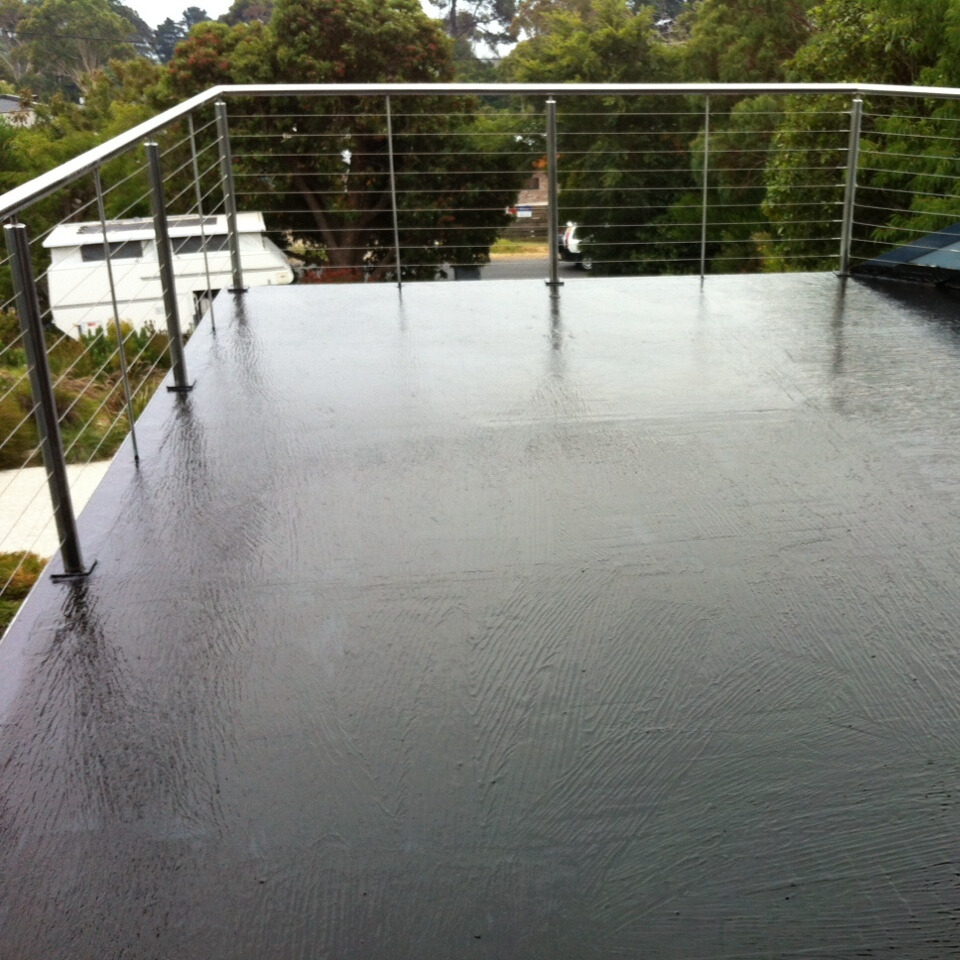
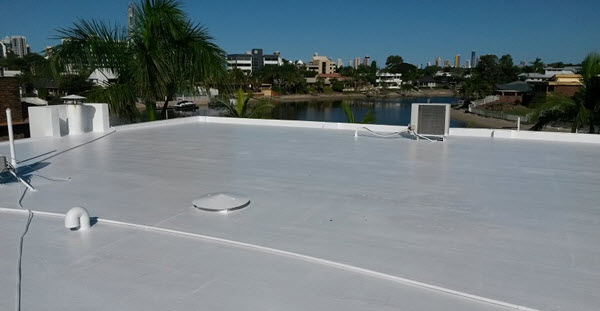
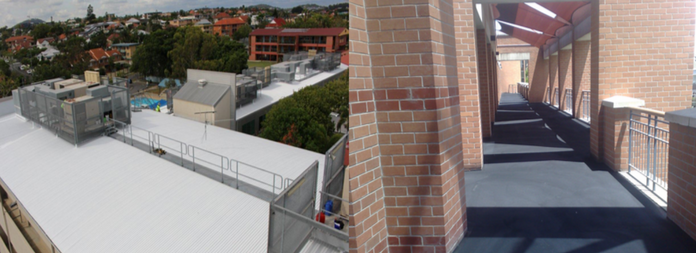
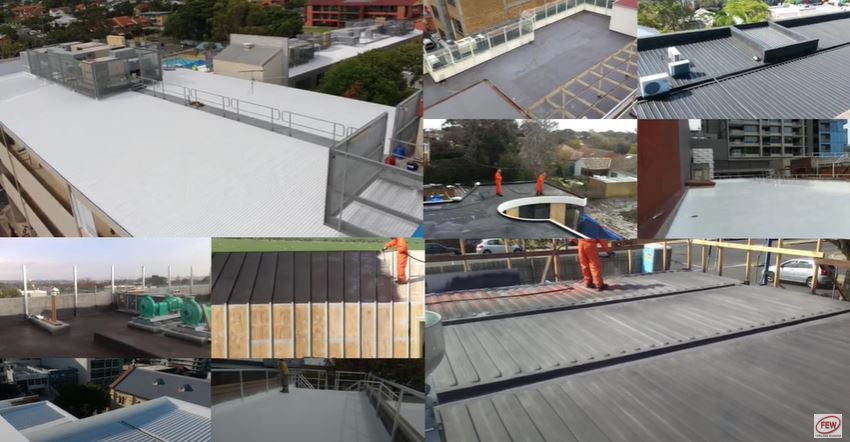
Liquid Applied Membranes are state-of-the-art new generation waterproofing systems providing a rapid spray-applied membrane to permanently solve water leaks.
Spray Applied Waterproofing
Liquid Applied Membranes (LAM) are a low viscosity waterproofing membrane which is applied as a liquid coating to horizontal and vertical surfaces.
Monolithic, seamless and with the capability to conform to every surface configuration is causing its demand to escalate in the construction industry.
Liquid Membranes offer characteristics & properties that traditional waterproofing products are not capable of.
Liquid Membranes do not have seams or joins and offer extreme flexibility.
Video Below
Waterproofing Membranes that Last
This is the one of the most common questions I am asked by builders and clients.
There are certainly issues about achieving successful waterproofing that still challenge us even after all these years in the industry.
However there are some facts that remain constant – experience, knowledge and attention to detail – there is our guarantee of a long lasting waterproof membrane.
Combining the unique properties of spray application together with a fluid liquid product provides a seamless, flexible & monolithic membrane that can conform to any shape.
Balcony Restoration
Retaining Walls
Waterproofing Membranes should demonstrate the following properties:
Extreme Flexibility
A quality waterproofing system that is seamless and flexible
Flexibility allows the membrane to stretch with structural movement and settling; bridging small hairline cracks that can occur if substrate is concrete or block.
A quality membrane remains flexible even after curing and will not dry out, crack or peel.
Robust Adhesion
A quality waterproofing system provides good adhesion to the substrate.
Good adhesion, together with flexibility and correct application, and your membrane will last indefinitely.
While most membranes are easy to install over continuous flat areas the difficulties start at:
Terminations
Changes in substrate & levels
Discontinuity in substrate because of penetrations
And, in some complex installations, the junction between different types of membranes must be correctly detailed.
Choosing the appropriate waterproofing membrane depends on several variables – the substrate, whether it is new build or repair & remedial works, below ground or above ground tanking etc.
Basement Waterproofing
Metal Roof Repairs
Liquid Applied Waterproofing Membranes
Choosing Expert Waterproofing Contractor
Choosing Experienced Waterproofing Applicator
Our dedicated spray unit provides rapid application of Liquid Rubber Membranes- up to 3 x faster than conventional methods.
More than anything a quality Waterproofing Contractor requires an understanding of potential problem areas.
Careful application techniques mean good preparation and attention to detail.
Waterproofing Preparation is Important – substrate surfaces must be sound, stable, dry, clean and free of loose, flaking material and any substances that may affect adhesion.
Video Below – Retaining Wall Waterproofing & Tight Access
Below ground waterproofing is as important as the foundations supporting an entire building structure.
Without the combination of sound footings and waterproof structures a building will deteriorate rapidly.
Unlike some other building components that might be designed to be replaced several times within the overall building service life, below grade systems need to be built to approximate overall service life.
Below grade systems are often inaccessible for repairs and extremely costly if modifications or rectifications are necessary at a future date.
Prevent damage to the your newly installed waterproof membrane.Protecting the integrity of the membrane after installation also protects your warranty.Arma-Blue Protection – Waterproofing Sheet – Installation Instructions – see attached PDF – Arma-Blue Instructions
ARMA-BLUE Protection Sheet
ARMA BLUE Protection for Foundation
Arma-Blue Protection Sheet – Manufactured in Australia
Arma-Blue is an advanced protection system based on a closed cell cross linked foam fused to a strong poly fabric – not harmful to the environment.
Waterproofing Protection that is also Self Adhesive
A unique product specially developed to protect numerous types of membrane systems both in the horizontal and vertical plane.
Ease of installation and the knowledge that the sheet will not detach from the membrane surface under severe weather conditions that may follow eg; high winds etc. this gives peace of mind and assurance that your company can install Arma-Blue and leave the job without the fear of a call to say your protection install is all over town and not where it was meant to be.
NOTE: Application to cementitious or highly textured surfaces in the vertical plane will not bond successfully. It is recommended that a small trial patch be carried out on all surfaces to ensure proper adhesion. Extreme cold conditions may also affect bonding.
A further benefit from using Arma-Blue, is that once you have installed it over the membrane, you have less chance of your membrane being damaged by following trades or damage by UV exposure due to delays in construction.
Arma-Blue is UV stable and will continue to protect surfaces for the life of the install.
Waterproof Tanking Protection Sheet benefits
Fast install over other protection methods; less labour cost.
Has high abrasion resistance.
Will not decay or rot.
Will not expand or distort when exposed to heat or sunlight.
Minimum distortion under traffic use.
Good Impact Resistant.
How to Install Waterproof Coating Protection – Arma-Blue
Ensure surfaces are dry.
Ensure surfaces are clean and dust free.
During application ensure all air is expelled between face of membrane and Arma-Blue sheet.
Allow to overlap Arma-Blue sheet by minimum of 20mm on each side lap.
Apply adequate pressure by and or broom to complete surface area of contact to ensure positive adhesion to substrate.
On vertical applications, should Arma-Blue be left exposed for extended periods it is recommended that Arma-Blue tape be applied at top edge of membrane to prevent possible leading edge peel.
Arma-Blue Commercial For All Builders & Renovators
Arma Commercial is a superior means of protecting almost anything and any surface. Due to its extreme strength, trafficability and soft non scratch backing and simple install using Arma Tape.
Over the years, our experience has shown that a substantial number of leaking balconies are not always due poor waterproof membranes or installation issues, but rather to do with other factors like tiling, adhesives, and not enough (or even no!) expansions joints.
These findings by the Findlay-Evans Team, are also backed up after reading many forums on waterproofing, tiling , balconies, water leaks and waterproofing failure.
Entire balcony subfloor rebuild due to water leaks.
Balcony Waterproofing
1. Hire Only Skilled Tile Installers
Tiled balconies require a durable solid surface together with correct falls & functionality.
Only well-trained and experienced tile installers can produce installations of the highest quality.
To source quality-oriented tile installers from amongst substandard trades, consider hiring a proven tiler with references, past projects and knowledge and skills which meet industry standards and best practices.
2. Use Quality Tilers & Adequate Expansion Joints
Be certain that all parties involved in the balcony project, including the architect, specifier, designer, waterproofer, tile salesperson and the tile installer know and understand the critical use and placement of expansion joints. Failure to set out tiles correctly will most often result in a system failure.
This will mostly be caused by expansion of tiles which in turn causes tiles to compress against each other.
In the absence or lack of expansion joints, the only release of this tension is to force the tiles upwards – thus tearing the waterproof membrane below and breeching the membrane.
This of course this will result in a leaking balcony.
All tiled balconies, both residential and commercial structures, will move with temperature and humidity variations.
To accommodate for this expansion and contraction activity, the use of expansion joints is a must.
The number of joints will vary depending on tile selected and quality of the biscuit (back of tile) and also the ability to resist tile growth from moisture ingress to the tile itself and / or expansion and contraction of tiles in + / – temperature variations.
Although the code says 3.0 metre intervals for expansion joints, we strongly urge you to recommend many more expansion joints.
Increasing the number of expansion joints is especially important when tiles are dark colour and/ or a cheaper range of tiles have been selected.
Cheap tiles and dark colored tiles “grow” after being laid (moisture absorption into the tile biscuit).
If the minimal, or sometimes even non-existent expansion joints, over time and with movement these will close causing the tiles to lift and pop off/crack, puncturing the membrane by tearing holes in it – and subsequently causing leaks.
“The builder, engineer, architect or designer shall show the specific locations and details of movement joints on project drawings in accordance with the relevant Building Code.”
The following information about adhesives and screeds are my own personal views derived from many years of removing faulty balcony work carried out by contractors that continue to install incorrectly.
These comments are from personal experience and constant frustration of bad practice.
Tile Industry experts agree this is one of the easiest insurance policies for preventing installation problems.
Various adhesive materials are available in differing performance grades.
Contact the adhesive material manufacturer for products with the specific characteristics and performance levels necessary for success.
One of the most common failures is using an adhesive that is incorrect for the purpose; such as a balcony subjected to considerable amounts of rainfall and the adhesive is not designed to be submerged in water. This will subsequently break down.
When the adhesive breaks down, the tiles will lift and sometimes the adhesive itself will re-emulsify.
Medium Rise Apartment – 8 years old
Again with lack of adequate expansion joints.
Very porous tile (highly absorbent terra cotta) – expansion causing sectional uplift.
This in turn caused waterproofing membrane below to tear.
At least this balcony does have the membrane on top of the screed! Just poor tile installation.
4. Verify Balcony Tile Surfaces are Level
To provide level ceramic or stone tile installation; carpenters, masons, concrete installers, and other trades must meet the tile industry standards for flatness tolerances.
If substandard surfaces are encountered, these must be corrected before tile installation begins.
Otherwise, the finished tile surface will be compromised.
Problems are exacerbated when a membrane is laid flat and a screed is applied over the membrane and then tile directly onto screed.
This method allows the screed to remain wet over winter months and if this is accompanied by incorrect tile adhesive, the constant moisture will degrade the adhesive – causing bond failure.
Correct substrate to apply waterproof membrane & finish with tile installation
Ceramic tile installations require a stiff or rigid surface.
In some cases, installations, including natural stone, may require additional subflooring, wall studs or bracing.
Tile contractors should follow the applicable recommendations, as well as the recommendations of the manufacturer’s products being used in the project.
Important Note: substrate for natural stone tile installations must be twice as rigid as that for a ceramic or porcelain tile installation.
6. Verify Minimum Mortar Coverage
Tile industry standards require minimum mortar coverage of 80% in dry areas and 95% in wet (showers) or exterior areas. Natural stone tile installations require 95% coverage in all applications.
This refers to the contact area of the bonding material (thin-bed mortars, large and heavy tile mortars or epoxy adhesives) with both the back of the tile and the surface being tiled.
7. Tile Site Conditions Are Controlled
Job site conditions can have a serious impact on the success or failure of a tile installation.
Many products used in tile installations require that the temperature be maintained within a specific range and duration.
Be certain to follow the manufacturer’s guidelines to ensure a long-lasting installation.
8. Correct Tiling Methods and Materials
Not all installation methods and/or materials are suitable for all applications.
Be certain that your contractor will use the National Construction Code (NCC) and Relevant Standards and materials rated for the intended application or a method that is recommended, fully specified, and warranted by the product manufacturer.
Research manufacturer’s websites to determine suitability, application recommendations and product warranty information.
Review the manufacturer’s product data sheets and recommendations for the tile, substrate, bonding materials, membranes and grout which will be used on the job.
Just because a product is available doesn’t mean that it is appropriate for a given installation.
9. Allow for Adequate Cure Time
Allow a tile installation to cure sufficiently per the manufacturer’s recommendations before exposing it to moisture, traffic, temperature changes or overlaying products.
Otherwise it will not perform as a quality tile installation.
Amount of time required will vary based on site conditions & the specific materials being used.
10. Use of Crack Isolation Membranes as Needed
Cracks in concrete and other areas of movement should be treated with a crack isolation membrane to help eliminate cracked tiles.
Check with the membrane manufacturer for specific use and application recommendations.
Very Important!Insure tile contractor cleans all grout as part of job.Too many floors are left with a grout haze which has customers scrambling to clean. This should be a major part of the contract.
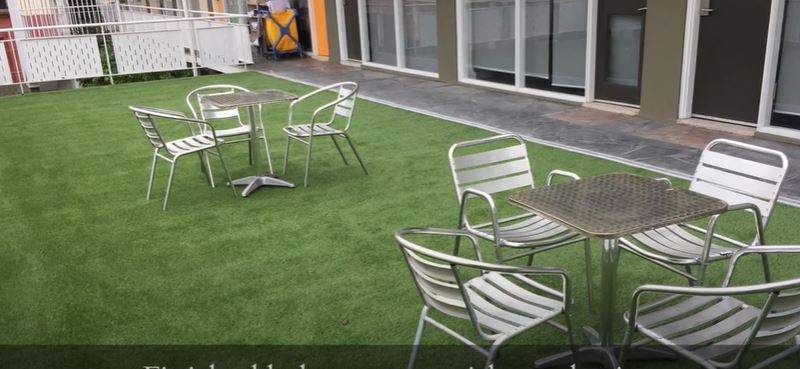
Educational Facility with Instant Turf
Balcony Calcification
“Efflorescence” occurs only in the presence of water.
This shows as white residue leaching out of grout joints. This should not be confused with calcification (salts) leaching out.
Calcification is caused by water being in constant contact with the concrete slab below; or more commonly a screed on slab where the membrane has been installed under the screed and the tiles fixed to the screed directly.
The problem with this type of method is water will migrate down through grout joints, etc into the cement screed and thus saturating the screed (as the water will not escape on a flat surface).
When a screed is allowed to retain water over long periods, the water will react with the salts (minerals) that are naturally in sand/cement.
The result is a water borne solution which will leech out & is extremely salty to the taste.
Once this solution comes into contact with the air, it will calcify into a very hard salt rich formation (stalactites & stalagmites in a cave are a good example).
This can be avoided by installing the membrane on top of the screed which should have adequate falls to run off areas or drainage systems.
Salt solution is very corrosive and will damage metallic items within and around a concrete slab i.e such as reinforcing mesh rusting and eventual explosion of concrete as the rust swells. (concrete cancer), metal ducting and conduits, fixtures and fittings, balustrade, etc will all rapidly deteriorate when allowed contact with the solution.
Best Waterproofing Membrane for Balconies
Liquid Applied Membranes are most often our waterproofing product of choice – this is because elastomeric waterproof membranes have many unique properties.
Advantages of Liquid Applied Waterproofing Membranes
Liquid Rubber Membranes have many properties that are superior to Traditional Waterproofing Systems.
Extreme flexibility – allows for structural movement.
Horizontal and Vertical surfaces – mould to shape & around services, penetrations etc.
No Flames, heat or solvent adhesives used – non toxic, odourless, non-flammable liquid components.
Safety & OHS Compliance – No hazard for construction sites, safe for workers & clients during application.
Manufacturer & Installer Guarantees – As Registered Building Practitioners under the Victoria Building Authority (VBA) we can offer warranty insurance, full public liability and product insurances.
The Australian Institute of Management (AIM) recently engaged F.E.W Waterproofing to resurface the Level 6 plant area which was prone to water leakage.
Liquid Rubber was used and is brilliant seamless product; we were very impressed with the finished product.
The F.E.W workmanship was of a high standard. Since having the Liquid Rubber laid down we have not experienced any water leaks.
D. Papal Australian Institute of Management (Vic & Tas) Building Manager
A single spray-applied coating of liquid membrane can bring an old roof back to looking new.
An leaking roof – flat, concrete or metal – and often the damaged membrane itself, do not have be removed.
This provides a fast and efficient repair process for roofs without costly disruption and downtime.
Roof Waterproofers
Waterproofing Metal Roof
F.E.W offer a unique waterproofing repair method for existing leaking roofs by over-spraying with a liquid membrane.
Case Study Video Below
Find out how we brought a badly damaged roof back to life – see video below.
Case Study – Repairs to Flat Concrete Roof
CitiPower’s J Substation is situated in Melbourne’s CBD in an historic red brick building at the corner of Spencer and Lonsdale Streets.
This facility is still in use even though currently undergoing a complete refurbishment.
We provided a complete repair of the extremely damaged roof membrane even with refurbishment works occurring on-site; our liquid spray applied system is fast and efficient.
Waterproofing Rooftop Plant Decks – Multi Storey Buildings
These hard wearing, seamless, monolithic and flexible systems can also be structurally reinforced.
Liquid Applied Membranes (LAM) are capable of resisting UV rays, encapsulating asbestos, withstanding “potable” (standing) water and coping with structural movement and deformation.
All work is supported by company, manufacturers warranty, OHS compliant and certified applicators.
Why use Liquid Rubber Waterproofing Membranes?
Our preferred choice of waterproofing product that provides a cost effective & robust roof repairs is the cold spray-applied Liquid Rubber waterproofing system.
Amongst the many unique properties of a Liquid Rubber membrane, there are two which are critical for roof waterproofing: extreme flexibility combined with strong adhesion – both ideal qualities for a rooftop waterproofing membrane.
Liquid Membranes provide water protection to a wide range of surfaces; metal, concrete, timber and asbestos. Liquid Rubber can also encapsulate rust and asbestos and is UV stable and Eco-friendly.
Using Liquid Membranes to Repair Roof Leaks
Video Transcript Below (abbreviated)
A case study here we’d like to share with you – a tricky industrial roof in Melbourne CBD; actually it’s an historic building.
This is a power station providing power for a many of the new high rise buildings being built up and around it.
We were asked to come in through another contractor. The builder in this case required professional waterproofers with a specialized system to rectify a badly deteriorated roof. This roof was leaking into the power station below.
So we took the challenge on and developed a system that would work and we’re very happy with the results and just like to share that with you.
There were five separate roof areas over the whole span of the building which was an old Victorian building – some hundred and so years old.
The various roofs had been built up over the period of time with a multitude of different types of membranes.
So each roof, pretty much had to be dealt with individually. One of our suppliers actually said there was more cracks than roof when we showed them photographs and a proposal to rectify.
Our meticulous preparation involved filling up all the voids and cracks, giving the roof a new surface for the liquid membrane to adhere to.
After the preparation was completed, then we started spraying a liquid rubber membrane over the top.
We built up the membrane to approx 1500 micron.Specialist areas were treated with special reinforcing mat and sprayed with a dark grey liquid rubber, to help reflect that a little bit.
The Liquid Rubber was idea as the roof had multiple stairs adjoining into various levels. We could successfully flashed off all fixing points.
This was a very successful job, all things came together really, really well and their clients were very happy with us, we’re very happy with the end result. We were proud of this job which showcased this historic building.
Just like to share that with you, thanks for listening, if you got any questions please give us a call.
Spray application of liquid waterproofing over coats the existing – so there is no need to remove the roof or even the existing failed sheet membrane.
Our spray equipment can be dismantled and easily re-assembled on rooftop terraces. This means we can provide waterproofing membranes for all roofs which have access.
Most often roof replacement is not necessary – after careful preparation our roof waterproofing system can be sprayed over existing surfaces.
Case Study: Eco Waterproofing Membranes
As our waterproofing membranes are spray-applied this means that they can be installed without affecting or disrupting the workplace beneath.
F.E.W Waterproofing systems and products are an instant set application meaning that installation is a very fast process – up to 3 times faster than conventional sheet/torch-on systems.
By using the latest technology in liquid applied waterproofing means that we can apply membranes to new and/or existing roofs and over just about any type of material and very often can overcoat existing membranes and roofs.
Spray application of liquid waterproofing over coats the existing – so there is no need to remove the roof or even the existing failed sheet membrane.
Liquid Applied Membranes provided a fast & efficient solution to a challenging project – it was impossible to remove the roof of this historic power station – spray application was the ideal method.
Heat Reflective Thermal Membranes & Coatings
Heat reflective waterproofing membranes – improve the appearance of existing roofs while also reduce heating/cooling costs by decrease interior temperatures up to 10 degrees.
Using a Thermo Top Coat together with Liquid Waterproofing Membranes, a roof becomes permanently impervious to water and also has the properties of UV stable, seamless, flexible and robust roof coating. F.E.W Waterproofing are specialists using liquid applied membranes for all new and existing roofs.
Spray application of liquid waterproofing over coats the existing – so there is no need to remove the roof or even the existing failed sheet membrane
Liquid Applied Membranes provided a fast & efficient solution to a challenging project – it was impossible to remove the roof of this historic power station – spray application was the ideal method.
This provides a rapid & cost effective watertight coating for leaking balconies, basements & roofs.
Using spray-on waterproofing products, Findlay-Evans provide long term & permanent watertight protection for facilities & infrastructure.Save thousands of dollars by eliminating time, cost & the inconvenience of removing an existing deteriorated surface by spraying directly over.
Liquid waterproofing systems allow rapid, cost effective seamless protection of balcony, basement & roof structures without the application of heat or fumes or adhesives.
When used in restoration projects, liquid applied waterproofing methods can usually be applied over existing waterproofing surfaces without the need for stripping and removal.
This saves time and cost – especially important for time sensitive commercial waterproofing projects.
Depending on the system chosen, waterproofing is guaranteed for 10, 15 or 20 years.
Findlay-Evans offer a range of solutions to help property management companies, architects, engineers and tradesmen who face the challenge of selecting appropriate products and services for refurbishment and remedial projects.
Spray On Liquid Waterproofing Products are multi-functional in design, providing not only waterproofing but also act as excellent adhesives in their own right and create an aesthetically pleasing result.
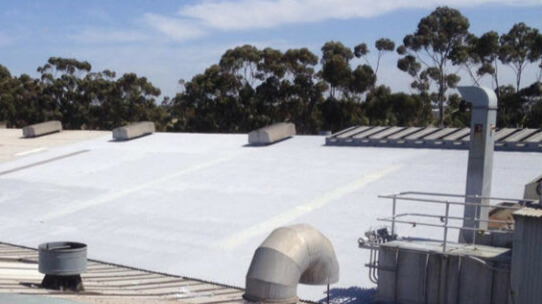
Roof with new membrane.
Leaking Balcony & Roofs – Body Corporate
Making a Building Sustainable
The maintenance life cycle of a building structure is a serious cost consideration for asset protection.
Prolonging the life cycle of balconies & roofs is often the difference between selecting a superior product that provides a long term & maintenance-free life, or a lesser product that will need work after 5 years.
Balcony strip, re-install waterproof membrane, tile and/or apply top coat.
Carpark concrete remedial waterproofing and crack injection
Repairs Existing Waterproofing Membranes
Repairs to Leaking Torch-On Membrane
We offer a wide range of premium quality waterproofing products that are innovative and cost effective solutions, engineered for durability and reliability.
Liquid Rubber products cure to provide a seamless, fully adhered flexible membrane which prevent water ingress and resist damage from water, ultra violet light and harmful chemicals.
Liquid Rubber is applied as single cold spray-applied waterproof coat ( NO heat or torches involved) and will bring an entire balcony or roof back to life without costly downtime, exposure to the elements & OHS issues.
And metal roofs come in a variety of different profiles & contours – making waterproofing a challenge if using sheet type methods.
Liquid Membranes Ideal for Metal Roof with Contours & Profile
Why Use Spray-On Waterproofing Membrane
Spray On Liquid Membranes ensures the waterproof coating will conform around any shape & completely seal around roof fixings, seams, metal welds and joints and A/C units.
Liquid Applied Waterproofing is the ideal product for sealing and restoring a “busy” rooftops that have multiple services & utilities.
Case Study – Video Below
Best Waterproof Coating for Metal Roofs
Liquid Roof Coatings provide a viable long-term alternative to removing and replacing the existing roof.
RAPID INSTALLATION – Spray application for roof membranes is fast – up to 1000 sq/m per day.
Spray apply membranes can be up to 3 x times faster than other waterproofing systems like Torch On,Torch Applied & Sheet waterproofing products.
This means a roof can be waterproofed quickly & efficiently without affecting or disrupting the workplace beneath.
Membrane technologies have produced liquid waterproofing materials that are easy to apply, non-toxic, odourless, solvent free, with seamless application and high strength and bonding characteristics.
Save time and money not having to remove and replace the damaged membrane or roof.
Liquid membranes are applied in a single coat – this will combat flaking, rusting and peeling metal.
Applied directly to the roof with no priming – offers a 100% waterproofing formula with robust adhesion.
These are fast-acting protective membranes that will protect and preserve the life, look and performance of roofs for all types of building structures.
Liquid membranes provide robust reinforcement & waterproof protection over all roof seams and joins – as the roof coating is seamless – water cannot seep through no matter the direction of wind or rain
Roof Coatings
Liquid Waterproofing Systems have many advantages over traditional types of waterproofing products i.e sheet, roll on and torch on – particularly within the refurbishment sector.
Liquid Roof Membranes do not require heat, flames or torches for application and satisfies all OH&S requirements.
These advantages over traditional types of waterproofing products i.e sheet, roll on and torch on – is particularly important within the refurbishment roofing sector.
Spray Applied Liquid Waterproofing
Liquid roof coatings offer a seamless finish curing to a permanently elastic, seamless membrane. This is the ideal roof repair method for long term waterproofing of awkward roof details such as pipe penetrations, roof upstands and gutters.
Liquid roof systems are the perfect choice for long term protection of all common roof surfaces:
Clip Lock & Tray Deck
Steel
Corrugated Iron
Aluminium
Asbestos
Bitumen, Concrete, Timber & Corrugated Fibro
Fix Leaking Roof with Lasting Waterproofing Repair
We regularly come across deteriorated existing roof that have caused extensive damage due to water leaks.
Case Study – Video Below
There are many different products on the market however our product of choice are Liquid Applied Membranes (LAM).
These membranes are seamless, elastomeric coatings which also have the advantage of being extremely robust and with full adherence to just about any surface – also comes with a 15 year warranty.
Liquid Rubber Waterproofing Membranes are a great alternative to bitumen roofing, sheet and rolls which have many disadvantages i.e joins/seam, heat & flames and are not fully bonded to the substrate.
Existing membrane: Leaking roof with badly deteriorated membrane.
Roof after liquid coating + thermal top coat
Thermal Top Coats provide an enhanced and extremely effective protective roof surface rather than application of a conventional waterproofing membrane alone.
Elastomeric Liquid Roof Coatings
Thermal roof coatings offer high light reflectivity and dissipation of heat while reducing UV light degradation.
Interior temperatures are reduced approx 10 degrees, saving air conditioning/heating energy and so providing significant cost savings.
UV Roof products are also a spray-applied system providing a seamless roof coating which bonds to the base membrane and remains flexible without cracking or deterioration over time.
Spray Application of Thermo Top Coat
Case Study
Metal Roof Waterproofing Membrane for Shipping Container
Shipping containers provide an affordable structure that can be modified in various ways creating a multitude of uses.
We provided a Liquid Rubber waterproof membrane for these three shipping containers in an inner suburb of Melbourne that were being transformed into a trendy urban cafe.
Case Study – Video Below
Edited Video Transcript Below
We were asked to apply the Liquid Rubber system as this membrane had the special properties required: robust, UV resistant, extreme flexibility, bonds directly to the metal shipping containers and follow the contours of .
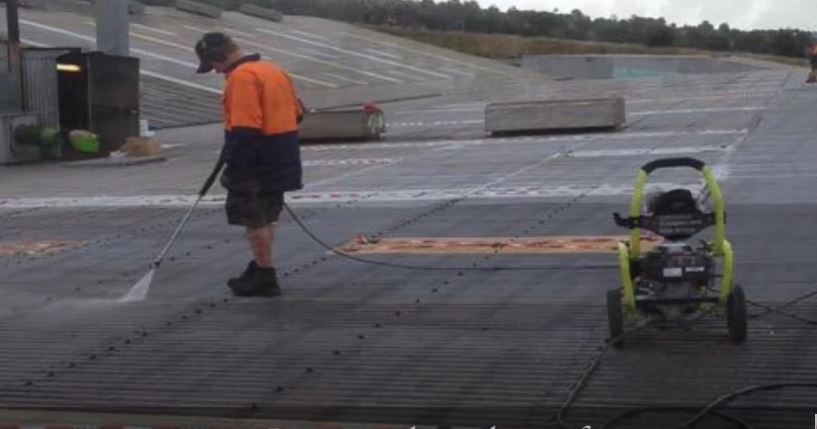
Preparation for this project involved power washing the surface thoroughly, removing any loose material. There was some remaining paint and as it was firmly bonded to the metal surface, Liquid Rubber was sprayed over the existing material.
There were box gutters installed between each shipping container, linking the roof together. These box gutters were detailed by hand individually, including air conditioning, vents and even the storm water outlets.Once these were all detailed, the cold spray application of the Liquid Rubber membrane started.
Liquid membrane spray application is fast and efficient – this job was sprayed in the course of one day – approximately 118 sq/m.
The finished coating was approximately1.5 mm thickness overall, however with all the detailing there were areas of 2 -2.2 mm.
Liquid Rubber is highly flexible – so as these metal containers move with thermal changes, the waterproofing membrane will also move. In the summer months the shipping containers will move – expansion during the daytime heat and then contraction with the cooling down at night.
This continual expansion and contraction is one of the most devastating scenarios for most waterproofing membranes.Many membranes do not have flexible properties and under climatic cycles will crack, leading to water leaks.
As Liquid Rubber is highly flexible and will move and work with the whole structure and building and keep it all watertight.
Liquid Rubber provides a long lasting protective water barrier for all types of flat and pitched roofs.
Findlay – Evans Waterproofing, specialist contractors based in Melbourne, offer waterproofing maintenance, repairs and refurbishment to all types of roofing structures.
Due to numerous practical considerations, replacing a leaking roof is not always a practical or viable option.This is especially the case involving roofing for warehouses, factories and commercial precincts.
Often regardless of the number of leaks, the interruption to business, the time involved and the cost just makes roof replacement impossible.
Still, water ingress must be stopped and the interior of the building must be protected.
In these instances repairing and/or replacing the existing roof membrane becomes an attractive alternative to a complete replacement of the entire existing roof system.
Roof Repairs
Roof Waterproofing Systems – Remedial & Repairs
FINDLAY-EVANS Waterproofing offers an over-spray waterproofing system for remedial repairs to an existing roof. Spray applied liquid membranes can be applied over the top of a damaged existing roof.
This provides a fast, efficient and extremely effective solution to the problem of a leaking roof without the cost and disruption of removing the roof.
Fixing Leaking Roofs with Liquid Rubber
Repairing Damaged & Leaking Roofs
One of our projects involved over spraying a severely damaged roof membrane of a power substation in Melbourne’s CBD.
This was a challenging project: access was difficult, various other remedial works were in progress at the same time as remedial repairs to the roof.
It was impractical to replace the roof – so over spraying the existing old membrane with Liquid rubber was the ideal solution.
Waterproofing Membranes for Roofs & Rooftops
Cause of Leaking Roof
The cause of roof leaks is often extremely difficult to detect. Water can travel great lengths from the point of origin before finding an exit point.
Areas of weakness, like seams or junctions when using sheet membranes, often leads to water entering here and then tracking along underneath the sheet membrane. Over time the water will obviously cause damage to the substrate and enter spaces/voids/rooms below.
The repair of the roof in the project below involved meticulous preparation of the rooftop services. This was a very busy roof and required masking and hand detailing of infrastructure prior to the spray application of Liquid Rubber membrane.
Repairing Waterproofing Membranes on Metal Roofs
Liquid Rubber membranes can be applied to a large variety of roof surfaces: concrete, timber, metal and asbestos to name a few.
The spray apply application is an ideal waterproofing membrane for new or existing roofs and provides a seamless and flexible long term water barrier.
Liquid Rubber’s unique property of extreme flexibility allows the membrane to move with the roof surface under thermal changes.
This is particularly important with metal surfaces due to the expansion and contraction of the roof during temperature changes.
This project below using shipping containers for an inner city cafe is a perfect example of Liquid Rubber providing an ideal waterproof membrane.
Have your waterproofing installed correctly the first time.
We will do the thinking for you and eliminate leaking membranes, call backs & unhappy clients for all your projects.
Infrastructure
Above and Below Ground
Remedial Work
Findlay-Evans Waterproofing have successfully completed many remedial balcony repairs in Melbourne using instant or artificial grass/turf as the finished surface.
We have developed a balcony membrane system using instant turf which includes the use of an extra robust water barrier & protection sheeting –Arma-Blue.
Arma-Blue protection sheet is installed between the waterproof membrane & installed instant turf.
Arma-Blue provides a permanent long-term extra waterproof barrier, which our Team always use for balcony repairs using instant turf & also for all below ground works.
Education facility using Arma-Blue protection followed by instant turf installation.
Balcony Restoration in Melbourne
We see many balconies leaking due to poor design, inferior construction methods, incorrect waterproof application, and failed balcony finishes – which is mostly tiles.
Waterproofing Method for Commercial Balcony
This commercial balcony waterproofing project was located in Melbourne CBD.
The balcony required new membrane installation and also extensive structural repairs due to long term damaging water leaks.
As a cost saving exercise, a balcony extension had previously been built that was poorly designed and used low quality products.
The balcony addition was attached to the existing concrete structure – it was unsafe & required extensive structural work.
The extension used chipboard as flooring, and this was installed directly over timber joists.
A waterproofing membrane was applied to the scyon surface and cement screed applied to achieve falls for water to flow to the newly installed drainage systems.
Our plumber connected these drain points to the storm water system to alleviate the water shedding.
The rotting timber joists were replaced, the chipboard flooring removed and scyon sheets were installed as the balcony substrate.
Balcony Waterproofing – Preparation is Critical
Critical to successful balcony waterproofing is meticulous preparation & detailing to all surface joints, junctions, penetration & draining points prior to membrane installation.
Balcony areas not prepped correctly are areas of potential weakness for water ingress.
Findlay-Evans Waterproofing Team hand detail all such areas with reinforcing bandage – ensuring a permanent watertight barrier.
Balcony Membrane Installation
Once all structural & balcony repair work was completed, the waterproof membrane installation proceeded.
Findlay-Evans balcony waterproofing system consists four coats of Liquid Applied Membrane – including one base coat.
Best Balcony Waterproofing Product
Many balconies are currently constructed with minimal falls to the balcony surface – particularly seen in commercial & multi-level apartments.
Balcony designs with minimum fall has a significant effect on the choice of waterproofing product & installation method.
Minimal fall balcony surfaces are more liable to water ingress through the tile grout – leading to moisture sitting, or “ponding”, between the waterproof membrane and tiles.
If the membrane selected can not withstand ponding water– and many waterproofing products on the market cannot – in time the membrane will deteriorate and fail.
Spray -On Liquid Rubber Membranes
Spray Applied Liquid Waterproofing
Liquid Rubber – Rapid Application
View Case Study Video
Liquid Rubber Membranes are spray applied.
Spray application of liquid membranes creates a continuous seamless barrier horizontally, vertically up walls and around upturns, balcony balustrade, penetrations and pipes.
Our preferred waterproofing product to use for balcony projects.
Liquid Rubber can withstand “ponding” water – one of the few membranes with this ability.
Extreme Flexibility – unaffected by structural movement.
Spray Application – no seams of joins as areas of potential weakness.
Liquid Membranes – being liquid will cure to any shape & around all upturns & penetrations.
Ideal for Commercial Sites – Non-toxic, no VOCs, does not use flames, heat or solvent adhesives for application.
Using Instant Turf + Balcony Waterproofing
Once the crazy paving was removed, instant turf was installed as the finished surface.
Developed to repair & permanently fix water leaks for balcony/rooftops using instant turf:
Waterproof Coating
Membrane Protection Sheet
Instant Turf
1. Waterproof Coating
Balcony waterproofing membranes must be capable of bridging cracks and joints of the underlying substrate, whether this cement sheeting, Scyon board or others.
Membrane flexibility is an important criterion as the waterproofing will need to move with the normal contraction & expansion of the balcony envelope.
2. Membrane Protection
Membranes should be protected from mechanical damage if anything other than a “hard-wear” surface (tiles, etc) is being installed.
Used Arma-Blue protection sheet as waterproofing membranes need protection.
Instant turf installed over the top of Arma-Blue protection.
That isolates the artificial grass from the membrane itself.
3. Balcony Surface Using Instant Turf
View Other Balcony Waterproofing + Instant Turf Projects
Our experienced team of tradesmen have developed a robust & long-life waterproofing system that is ideal for roof repairs – using solvent-free Liquid Rubber.
Spray applied Liquid Rubber can bring a roof back to life with a single over coat of a liquid membrane.
Being liquid, our membranes will provide a watertight barrier no matter the roof shape, surface condition, amount of upturns, penetrations or rooftop services located.
Seamless – no joins or overlaps which are areas of weakness.
Durable & Versatile – no “down time” is experienced during roof refurbishment.
Extreme Flexibility – membrane will move with roof surface.
Quick Application – can adhere to strict timelines & operational restrictions on-site.
Heat & Flame Free – environmentally friendly, odour free & suitable for sensitive roof air-handling outlets, HVAC etc.
Long lasting waterproofing is worth usingQuality Products & Experienced ApplicatorsWaterproofing represents around 1% of building costs water leaks and subsequent damage represent approx 80% of building defects.
Leaking roofs in the commercial sector may involve damaging water ingress into plant rooms, sensitive business areas, infrastructure and amenities. Roof waterproofing repairs are time critical to prevent further structural issues.
Liquid Applied Waterproofing Products provide a seamless, UV stable and permanent waterproof membrane for roof refurbishment – no matter the age, condition or structure of the existing surface.
Chosen for its odourless, and versatile qualities, Liquid Waterproofing Systems are an ideal product to use with difficult roof access, quick application means projects can adhere to strict time lines and operational restrictions on-site.
This means, our Team is experienced in construction methods, building design, OH&S, SWIMS and industrial & infrastructure facilities.
These skills are vital for complex & challenging roof projects that often require case-by-case solutions to permanently fix water leaks & roof repairs.
Case Study Video – Metal Roof
Case Study Video – Concrete Roof
Roof Refurbishment & Waterproofing Repairs
Challenging roof refurbishment demands the highest of QHSE (Quality, Health, Safety & Environment) standards within tight timescales.
Complex roof areas involving high level of detailing & with numerous HVAC units, cabling, steel works, pipe & infrastructure supports.
Removal of existing roof ballast.
Liquid membranes can be sprayed under, around & over roof infrastructures to make water tight.
May require total removal of existing deteriorated membrane or ballast to return to base roof surface.
Liquid Membranes can very often overcoat the existing surface WITHOUT removal -saving time & money.
Mobile roof waterproofing equipment ideal for difficult roof access.
Provide safe work environment & adhere to SWIMS & compliance.
Project restricted by time constraints, heights, working with facilities & maintenance managers .
Roof Waterproofing Product – Liquid Rubber
The versatility of the Liquid Rubber System & ease of application mean our Team can provide a watertight, seamless membrane that fully covers all roof areas, complex details, penetrations, pipes & outlets on the roof structure.
Liquid Rubber is quick and easy to apply as well as versatile and durable.
Time on-site is decreased.
Liquid Applied Membranes are flexible and so will move with the roof structure & building envelope.
Just about ALL of our projects are delivered on time and on budget.
Operational continuity is a major factor and thanks to the speed of installation and efficient programme of works, our clients experience minimum ‘down time’ due to the refurbishment
Liquid Applied Membranes do not use heat, flames or VOCs.
Findlay-Evans are proud to be recognised as leaders in Melbourne roof waterproofing contractors.
Using reliable waterproofing systems combined with our skilled Team – NO SUBCONTRACTORS – we deliver projects successfully, on budget & on-time.
Registered Building Practitioner & Specialist Waterproofer
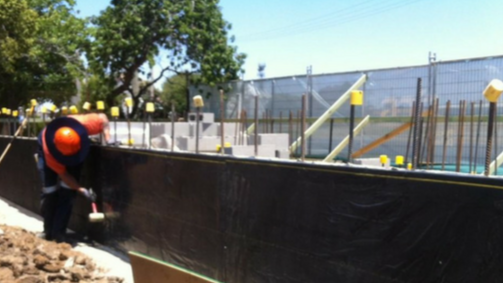
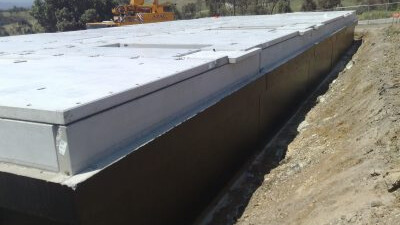
Basement waterproofing by applying Liquid Rubber and Arma-Blue protection sheet.
Case Study – View Video Below
The recent Australian construction boom has resulted in an unprecedented number of multi storey apartments & commercial construction.
Many of these buildings involve basements for underground car parking, storage, and utility areas.
However, an unfortunate consequence is evidence of an alarming increased frequency of building defects – and the most common of these defects is water leaks. Read article HERE
Of all the water ingress possibilities, the consequences of basement water leaks can be the most expensive and complex to rectify – often resulting in devastating & costly damage.
For commercial buildings, water leaks can ruin expensive equipment and disrupt business while in the case of residential buildings this can result in damaged finishes and furnishings.
Basement leaks add up to lost money, wasted time, upset customers and sometimes expensive litigation.
Leaking basements & foundations may comprise the structural integrity of the entire building structure.
Concrete & Basement Construction
Water & moisture is the source of most foundation problems and is the biggest factor in corrosion of basement reinforcing steel.
What to do if basement leaks result in concrete deterioration.
Despite what many may think – concrete is NOT waterproof.
Water can seep through perfectly intact concrete – given enough back pressure.
Uncracked concrete – and what concrete isn’t cracked? – may reduce the movement of liquid water, however water vapor can still penetrate quite easily.
Free Basement Waterproofing Guide
This guide is based upon my personal experience as a Registered Building Practitioner specializing in waterproofing applications and with over 30 years in the construction industry
Without the combination of sound footings and a waterproofed foundation, a building will deteriorate rapidly.
Unlike other building components that might be designed to be replaced several times within the overall building lifetime, below grade systems need to be built to approximate the entire service life of a building.
Below grade waterproofing systems often are inaccessible for repairs.
This can be extremely costly if rectifications are necessary at a future date.
In some instances, it may not be commercially viable, or even possible to fix or upgrade failed basement waterproofing systems.
Basement car park – concrete leaching from ROOF water leaks.
How to Waterproof A Basement
Keeping basements dry requires the right waterproofing system. To ensure water does not penetrate basements in new construction:
Prevent water from moving through walls & draining away is essential to a successful below ground waterproofing system.
Starting with construction of the slab floor / wall zone – these areas require a water stop for either tilt panels or block work.
Include crystalline growth compound in the concrete pour of walls or as a fill-in for block work.
Once walls are constructed, ‘tanking’ with a waterproofing membrane. Prefer LIQUID MEMBRANES for below grade.
Protect the membrane by installing a suitable barrier prior to backfilling.
Essential to the defence strategy is good drainage, for which there are many design options.
Allow sufficient ventilation.
The waterproofing method used needs to last the expected life-time of the building..
Waterproofing vs Damp Proofing & Waterproof Paint
Do not confuse damp proofing with waterproofing!
To permanently stop water and water vapor from entering foundation walls, you need to use a waterproofing membrane.
Damp proofing is intended to keep out soil moisture, but not liquid water that enters a basement via penetrations, gaps, cracks, and holes.
Waterproofing keeps out both water AND moisture.
A GOOD contractor will understand the difference between damp proofing and waterproofing.
The cost of waterproofing is initially higher than that of damp proofing.
As a building structure ages, the added cost of a waterproofing membrane is well worth the small price difference and will pay for itself in a few years.
Damp Proofing
Damp proofing alone it is NOT a waterproofing system.
Damp proofing will only deter – NOT STOP – water from passing through the walls and into interior spaces.
The cost of damp proofing is significantly less than waterproofing and hence is used more often.
Damp proofing is an inexpensive way to meet the lowest minimum standard of the building code.
Damp proofing has little resistance to hydrostatic pressure or “ponding” water.
Damp proofing is a very poor long-term waterproofing protection methodand rarely lasts more than a couple of years.
Note – we do not provide Damp Proofing when a waterproofing membrane is required.
Waterproof Paint & Coatings
Waterproof paint should be used sparingly – NEVER as the sole waterproofing method for below ground structures.
Waterproof paint is used more as a common do-it-yourself waterproofing method.
Very often waterproofing paint is just a thicker version of acrylic paint – i.e used to paint interior walls etc
Applying waterproofing paint to the inside of your basement walls WILL NOT stop water seepage through cracks or porous concrete.
Waterproof paint can trap condensation inside the foundation wall – leading to bubbles forming and the paint eventually peeling.
This will contribute to bigger and more expensive water problems.
Waterproofing paint should be regarded as a cosmetic fix.
Exterior Basement Waterproofing
A true Exterior Basement Waterproofing System keeps water out permanently – and is not just a water management system.
Aim is to totally waterproof the exterior walls of below ground structures & eliminate possibility of water penetration.
Waterproofing product and method for basement waterproofing should have a lasting effect.
Components of external below ground waterproofing systems
Basement Waterproofing will prevent water & moisture from moving through the wall.
Drains to control water away from the bottom of the foundation.
Robust protection of the waterproofing membrane.
Basement Tanking
1. Waterproof Membrane
Externally applied basement membranes include traditional sheet, Torch-On and Liquid Polymer Coatings.
Whatever product used, all external membranes require adequate access to the foundation base and external walls during construction.
Careful detailing of any joints, penetrations and service ducts are essential.This last point, unfortunately, is often overlooked!!
Liquid Spray Applied Membranes
2. External Drainage System
Purpose of exterior drainage systems is to create a permanent water flow away from the footings & foundations.
Drains to control water away from the bottom of the foundation.
Prevents water from accumulating and standing against the foundation.
Runs to a point lower than the footings – allowing water to naturally gravity feed away.
3. Waterproofing Membrane Protection Board
Robust protection board is an essential part to a basement waterproofing system.
Excellent resistance to standing water & hydrostatic pressure.
Robust compressive strength.
Long term durable membrane.
Flexibility & Elongation – will expand with the building envelope settles.
Advantages of Basement Liquid Waterproofing
Spray application creates a seamless membrane – no joins or seams to come apart.
Extreme expansion and contraction without cracking or becoming brittle.
Liquid will seal around all concrete & blockwork penetrations, holes, gaps etc.
Crack spanning capabilities to resist hydrostatic pressure.
Applied to green (uncured) concrete walls immediately after forms are removed.
Compatible with a wide range of drainage, protection, and insulation boards.
Very rapid cure rates.
Retaining Wall Waterproofing Membranes
Interior Basement Waterproofing System
Internal Controlled Water Management is another waterproofing system for basements.
Internal Waterproofing can be used alongside external systems – especially if a habitable room.
An interior drainage system addresses hydrostatic pressure, or the pressure of groundwater forcing its way through the basement walls.
A drainage piping is installed in the interior perimeter of the floor – routing water that enters the basement to a sump pump system that actively removes the water.
A backup battery-operated sump pump is often recommended to prevent flooding of the basement during a power outage.
Internal Systems are also an option for remedial basement waterproofing when it is not viable to excavate the external membrane.
Retaining Walls
Retaining Wall Waterproofing
Internal Basement Waterproofing – Controlled Water Management
Obviously there are various contributing factors affecting the cost of a roof waterproofing project – especially if construction repairs & restoration are also involved.
Using Liquid Applied Membranes the spray application stage of a roof project can be determined with respect to time (weather permitting).Find out about Liquid Applied Membranes HERE
However a major cost is the time required to prepare a roof surface prior to waterproof membrane application.
Great – not just good- preparation can mean the difference between waterproofing success or failure.
Meticulous waterproofing preparation means Findlay-Evans have confidence in our work, stand by our guarantees with excellent customer satisfaction.See Our Testimonials Here
Roof Waterproofing Method – Preparation
Old roofs over the years accumulate layers of pollution, chemicals & materials.
These areas need to be thoroughly cleaned prior to waterproofing.
Case Study Video Below
Failed membrane due to bad preparation.
Failure to implement meticulous & rigorous preparation may mean the membrane, whatever method used, will not adhere to the substrate.
Waterproofing preparation is especially important for roof surfaces that we call “busy” i.e multitude of rooftop services & plant decks.
These areas need to be detailed and made water tight around, under and over all upstands, penetrations etc.
Time & method taken can be significant – hence preparation costs can add up.
Video Roof Case Study
Melb CBD Power Station requiring extensive preparation work prior to waterproofing.
Many leaking roofs have not been regularly maintained, and often have been subject to routine patch repairs .
Over the years we have seen it all.
The multiple attempts to stop roof leaks by contractors and maintenance crews using everything from caulking to TPO patches, even peel and stick roofing patches.
Often times patches do not adhere and only managed to hide evidence of membrane damage caused by saturation.
Previous repairs have to be eliminated or managed prior to installation of a new membrane.
Case Study: Severe cracks on existing roof membrane
Cracks & voids covered – ready for spray application of Liquid Rubber
At some stage it becomes unmanageable to keep spending the maintenance dollar on short term roof repairs.
Many roof surfaces are well & truly at the end of their life cycle and in dreadful condition. In these cases roof surface cleaning, prepping & detailing is time consuming.
Flat roofs, concrete & metal, have seams, flashings, vents, fastener holes, upstands for roof services, old layers of bitumen………….. the list goes on.
Existing roof penetrations may be historically sealed with only a bead of caulking.
Sheet membranes may have heat-welded seam failures that need detailing & preparation.
Roof preparation – ballast
Preparation of all seams & joins to waterproofing
Puncture holes can be prolific, from years of foot traffic servicing HVAC units, vibrational movement of the roof-mount equipment and thermal cycling.
Prepping & detailing makes a roof surface suitable for membrane installation.
Guarantees a robust, long life & strongly adhered waterproof membrane to the substrate.
Sheet membrane prepped & detailed along failed seam joins.
Sheet membrane deteriorated due to “ponding” water.
METICULOUS DETAILING PRIOR TO MEMBRANE INSTALLATION ADDS TO THE TIME & COST OF A PROJECT.
However the consequences of not doing this correctly is even more costly & time consuming.
Solvent-free, water-based building products offer immediate solutions to both safer worksites plus quality, high performance adhesives and protection.